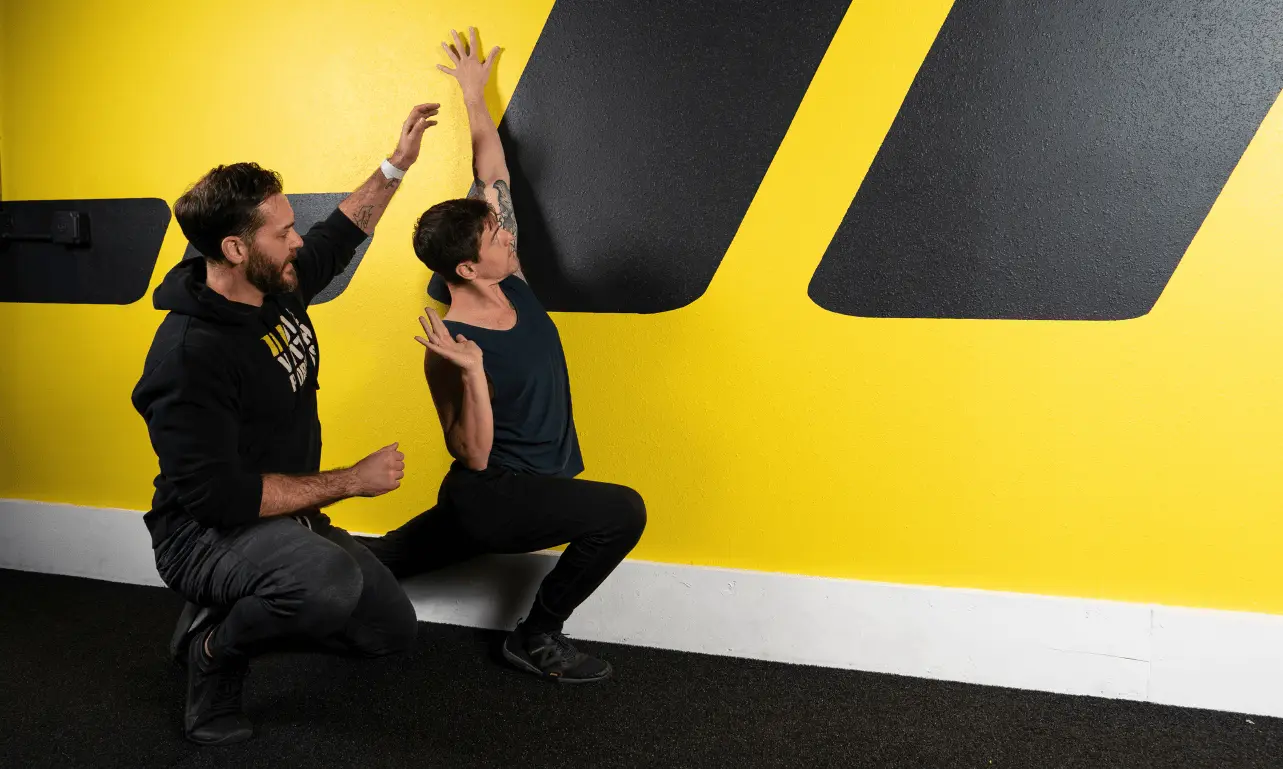
Traditional core training tends to revolve around bracing, rigidity, and resisting movement. While that approach has value in specific contexts, it only captures a narrow slice of how the human body actually produces force. David Weck’s Coiling Core Training challenges that model by placing rotation and spiraling mechanics at the center of performance and movement efficiency.
Rather than treating rotation as something to suppress, coiling core training teaches the body how to create, manage, and release rotational force. This mirrors how humans sprint, throw, strike, and change direction in real life. The result is a system that prioritizes elastic strength, coordination, and adaptability over static stability.
Weck, the inventor of the BOSU ball, developed the Coiling Core Method through decades of biomechanical observation. His work draws from sprint mechanics, martial arts, and applied movement science, all anchored to a central idea: rotational forces drive human movement far more than linear ones.
At the foundation of this system are two key concepts: ipsilateral spinal engine mechanics and coiling contractions. Together, they create strength that is responsive and dynamic rather than rigid and constrained.
The Principles Of Coiling Core Training
Coiling core training is defined by a small number of principles that clearly separate it from traditional core work. Each principle reinforces the idea that rotation is not a weakness to eliminate but a force to develop and refine.
Rotational Power Over Bracing
Conventional core training often emphasizes locking the ribcage and pelvis together through constant bracing. While this can create short-term stability, it limits the body’s ability to generate torque and transfer force efficiently.
Coiling core training shifts the focus toward controlled rotation. One side of the body shortens and compresses while the opposite side lengthens and expands, creating a spiral through the trunk. This pattern reflects how the body naturally moves during sprinting, throwing, and striking, where force is produced through asymmetry rather than uniform tension.
This distinction becomes clearer when viewed through the lens of rotational movement training, where direction, timing, and intent matter more than eliminating motion altogether.
Ipsilateral Spinal Engine Mechanics
Weck’s methodology aligns closely with the Spinal Engine Theory proposed by Dr. Serge Gracovetsky. This theory suggests that movement originates from spinal rotation rather than being driven exclusively by the limbs.
In practice, the spine functions as an engine that coordinates movement between the upper and lower body. When spinal rotation is timed correctly with hip and ribcage motion, movement becomes smoother and more efficient. For many people dealing with chronic stiffness or recurring back issues, learning to control rotation often matters more than simply increasing strength. This idea is explored further in conquering back pain with functional range conditioning.
Fascial Elasticity And Stored Energy
The body is organized through fascial slings that connect the trunk to the limbs. These tissues are designed to store and release elastic energy, not just generate muscular force.
Rotational loading enhances this elastic capacity. By repeatedly training the body to coil and uncoil, coiling core work improves recoil properties across the system. This allows movement to feel smoother and less effortful, particularly during repeated or explosive actions.
Reciprocal Compression And Expansion
Coiling mechanics rely on the relationship between compression and expansion. One side of the body compresses into a shortened, coiled position while the opposite side opens and lengthens.
This reciprocal pattern appears in nearly every athletic action. A pitcher winding up, a sprinter loading one hip before acceleration, or a martial artist preparing to strike all demonstrate the same underlying principle. Coiling core training makes this pattern intentional rather than incidental.
Proximal-To-Distal Force Transfer
Efficient movement starts at the center and moves outward. Coiling core training reinforces this sequence by teaching the trunk to initiate force before it reaches the limbs.
When the core coils and uncoils effectively, energy transfers cleanly into the arms and legs. This reduces energy leaks and supports more efficient expression of force across a wide range of activities.
Benefits Of Coiling Core Training
The benefits of coiling core training extend well beyond abdominal strength. When applied consistently, the method influences how the entire body moves, loads, and adapts.
Improved Athletic Performance
Most athletic actions are rotational at their foundation, even when they appear linear. Sprinting relies on spinal rotation and pelvic timing. Throwing and striking depend on rotational sequencing. Jumping requires the ability to absorb and redirect force through the trunk.
Coiling core training supports these demands by improving how the body stores and releases rotational energy. Athletes often notice smoother transitions and better timing rather than simply increased output.
Dynamic Stability And Balance
Although coiling core training emphasizes movement, it still enhances stability in real-world conditions. By learning to control rotation instead of eliminating it, athletes develop balance and coordination that transfer to sport and daily activity.
Reduced Injury Risk
Many injuries occur when the body is forced to rotate under load without adequate control. Training exclusively in anti-rotation patterns leaves gaps when rotation inevitably shows up.
Coiling core training builds resilience by strengthening the body’s ability to manage rotational forces intentionally, supporting long-term joint and spinal health.
Increased Mobility And Movement Options
By reinforcing rotational mechanics, coiling core training improves usable range of motion in the spine and hips. This added capacity allows the body to access positions actively rather than relying on passive range alone.
Improved Neuromuscular Efficiency
Repeated coiling and uncoiling sharpens communication between the nervous system and the musculoskeletal system. Movements become smoother and less effortful as sequencing improves.
Training With Intent
Coiling core training is not about adding complexity for its own sake. It reflects a broader philosophy where every movement has direction, purpose, and context. This same mindset underpins how we approach training with purpose, prioritizing meaningful movement over generic output.
Final Thoughts
David Weck’s Coiling Core Training provides a framework for understanding how rotation drives human movement. By shifting focus away from rigid stability and toward controlled spiraling force, the method aligns more closely with how the body actually performs.
When trained consistently, coiling mechanics improve athletic expression, movement efficiency, and long-term resilience. The result is not just a stronger core, but a system that moves with intent and adaptability.
Written by

Brian Murray, FRA, FRSC
Founder of Motive Training
Motive Training is a coaching studio in South Austin built around assessment, joint health, and strength you can use. Train with us in the studio, come to a KINSTRETCH class, or work through the progressions in KINSTRETCH Online.