Do you feel lost in the gym or unsure how to move forward with your training? Maybe you’ve been consistent but stuck dealing with nagging pain, stalled progress, or programs that never quite feel right.
This is where most people are failed by the fitness industry—and where high-quality personal trainer assessments make the biggest difference.
At Motive Training, assessments are not a formality or sales step. They are the foundation of effective training. When done well, an assessment replaces guesswork with clarity and gives your training a clear direction from day one.
What Is a Personal Trainer Assessment?
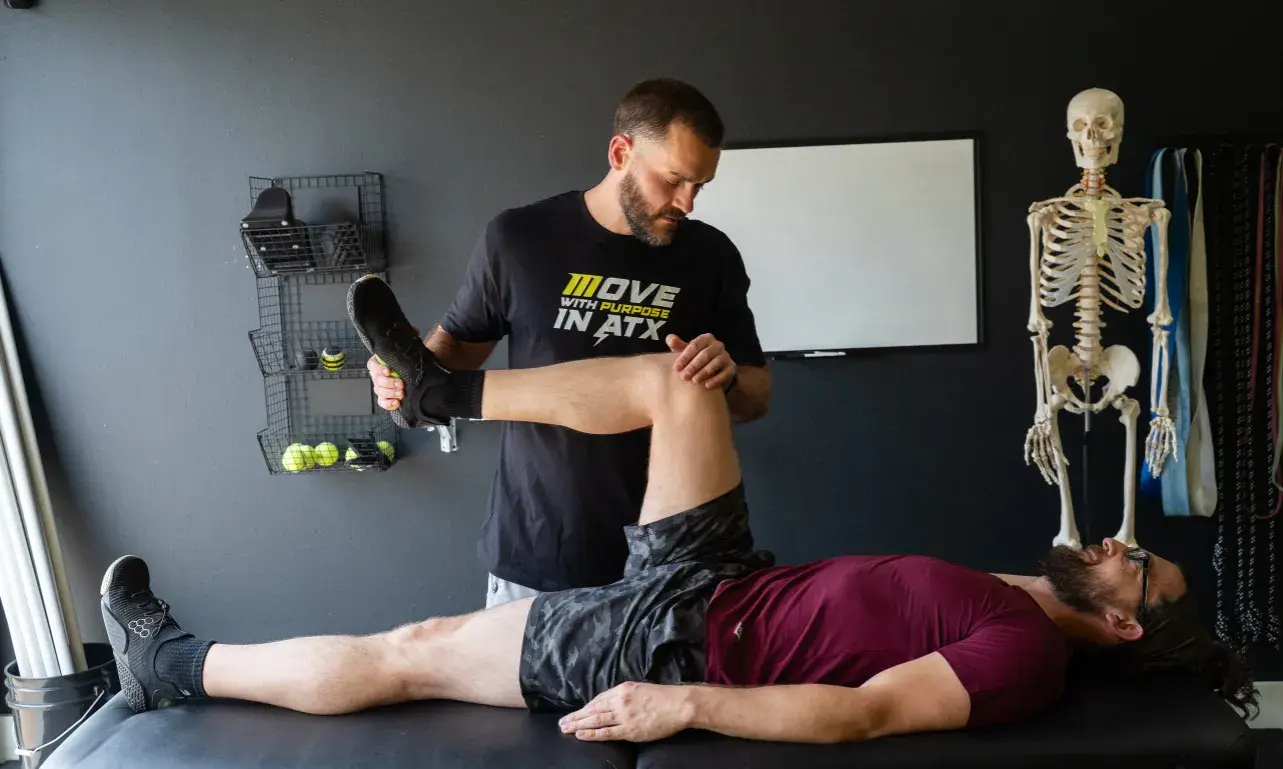
A personal trainer assessment is a structured evaluation of how your body moves, tolerates load, and adapts to stress.
It goes far beyond a warm-up or a quick screen. A meaningful assessment looks at:
- Joint range of motion.
- Active control versus passive flexibility.
- Strength in specific positions.
- Pain history and movement tolerance.
- Training background and goals.
The purpose is simple: establish a baseline that allows training decisions to be intentional instead of random. Without this step, programming relies on assumptions. With it, training has a clear rationale.
Why Better Assessments Lead to Better Results
Everyone brings a different movement history into the gym. Past injuries, sports, work demands, stress, and lifestyle all shape how your body moves today.
A good assessment doesn’t just ask what you want to do. It identifies what your body is currently prepared to handle.
This allows us to:
- Match load to joint capacity.
- Choose exercises that support progress instead of aggravation.
- Build strength where range and control are missing.
- Avoid plateaus caused by hidden limitations.
This is why generic programs fail so often. They ignore individual capacity. Better assessments respect it.
Why We Look at Joints Before Patterns
Many trainers assess movement by watching squats, lunges, or push-ups. Patterns matter, but they don’t explain why something breaks down.
When multiple joints move at once, compensations can hide the real limitation.
At Motive Training, we prioritize joint-level assessment first. This allows us to understand:
- Where motion is missing.
- Where motion exists but isn’t controlled.
- Which joints are likely absorbing stress they shouldn’t.
This approach gives us clarity before loading patterns and explains pain rather than guessing at it.
The Role of the Functional Range Assessment
One of the primary tools we use is the Functional Range Assessment.
The FRA is a comprehensive joint-by-joint evaluation from head to toe. It helps us identify:
- Active versus passive range of motion.
- Side-to-side asymmetries.
- Joints with limited workspace.
- Areas that may break down under load.
The goal isn’t to label problems. It’s to identify where training can be most effective and safest.
Injury Prevention Is a Capacity Problem
Injuries rarely come from one bad rep. They happen when load exceeds capacity over time.
Assessments help us identify where that mismatch exists early. Instead of reacting to pain after it appears, we train proactively.
This is why assessment-driven training often overlaps with what people are searching for when they explore injury rehab personal training in Austin. They don’t want endless caution; they want a plan forward.
What We Don’t Overemphasize
Posture
We don’t chase an ideal posture. Posture reflects joint capacity, strength, and movement habits. Change those inputs, and posture adapts naturally.
Generic Screens
We don’t rely on scoring systems that rate movement patterns without explaining the underlying limitation. Clarity matters more than numbers.
One-Time Testing
Assessments aren’t a single event. They’re reference points. We reassess to confirm progress and adjust training inputs intelligently.
Tracking Progress That Actually Matters
Reassessments provide tangible feedback:
- Improved joint control.
- Expanded usable range of motion.
- Better tolerance to load.
- Reduced pain during and after training.
This data-driven approach keeps training honest and motivating. It also aligns with how we document outcomes in our client results, where progress is measured by real change, not vague feelings.
Assessments Build Trust, Not Just Programs
A good assessment is also a conversation.
We listen to your concerns, past experiences, and what you want training to support outside the gym. That context matters just as much as movement data.
This is a major reason people seek out thoughtful coaching instead of generic gym programming. Feeling seen and understood changes how people commit to training.
Beyond the Gym: A Broader View
Training doesn’t exist in isolation. Assessments often include discussions around:
- Sleep quality.
- Stress levels.
- Recovery capacity.
- Daily movement demands.
These factors influence how your body adapts to training. Ignoring them limits progress. Accounting for them makes training sustainable.
Why Assessments Are the Real Secret Weapon
Good personal trainer assessments don’t slow progress. They accelerate it.
They replace confusion with clarity, fear with confidence, and randomness with purpose. When training starts with understanding, results come faster and last longer.
That’s why assessments remain the foundation of how we train at Motive Training—and why they continue to be our real secret weapon.
Written by

Brian Murray, FRA, FRSC
Founder of Motive Training
Motive Training is a coaching studio in South Austin built around assessment, joint health, and strength you can use. Train with us in the studio, come to a KINSTRETCH class, or work through the progressions in KINSTRETCH Online.