Functional Range Conditioning
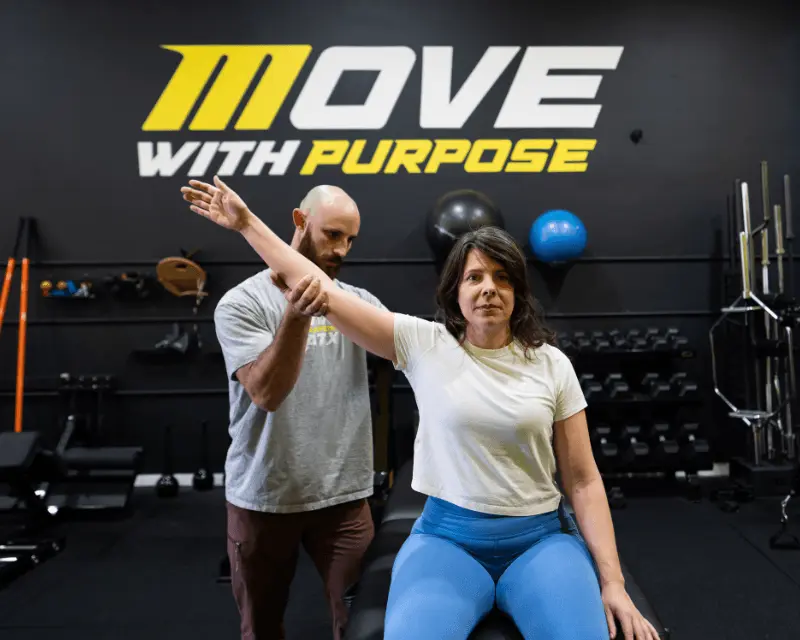
Training joints to control range, not just reach it.
Functional Range Conditioning is a system for building usable mobility. That means range of motion your body can actually access under its own control, not range that only shows up when something else is pulling you into it. The system was developed by Dr. Andreo Spina, and it sits underneath how we train every client at Motive. This page explains what it does and why we built the studio around it.
01
The gap most training never closes
There is a difference between the range you have and the range you can use. You might be able to pull your knee toward your chest with your hands and call that hip flexion. But if your leg cannot get close to that position on its own, that range is not really yours. Your body knows it. It will guard the position, avoid it under load, and route around it during sport and daily life.
That space between passive range and active, controlled range is where a lot of stiffness, nagging joints, and stalled progress live, though it’s not the only pattern that shows up. A joint locked down with barely any range to speak of is a different problem, and one that’s painful before it’s even limited is different again. Stretching can widen the passive end of that space. It does very little for the active end. FRC trains the active end directly, which is the reason the changes tend to hold.
02
What FRC does at the joint
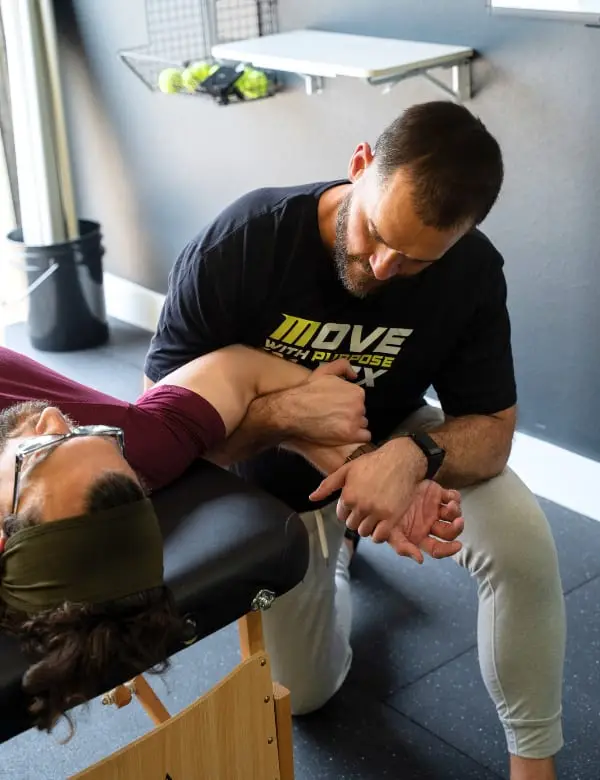
FRC treats the nervous system as the thing in charge of movement. Your brain only lets you actively reach a range it believes you can control. When a range feels unowned, the brain brakes you short of it long before any tissue is at risk. Train real control into that range and the brake eases off. That is the mechanism underneath everything in the system.
Controlled Articular Rotations, or CARs, take a joint through its full rotation under active muscular control. They do two jobs at once. They train the joint to own its range, and they give you an honest read on what that joint can do today, which makes them a self-assessment you can repeat over time. PAILs and RAILs build strength into the end ranges most training never touches, so the positions that used to feel borrowed start to feel like yours. None of this is stretching with better branding. It is strength work, aimed at the parts of a joint that strength work usually ignores.
03
Why we built the studio on it
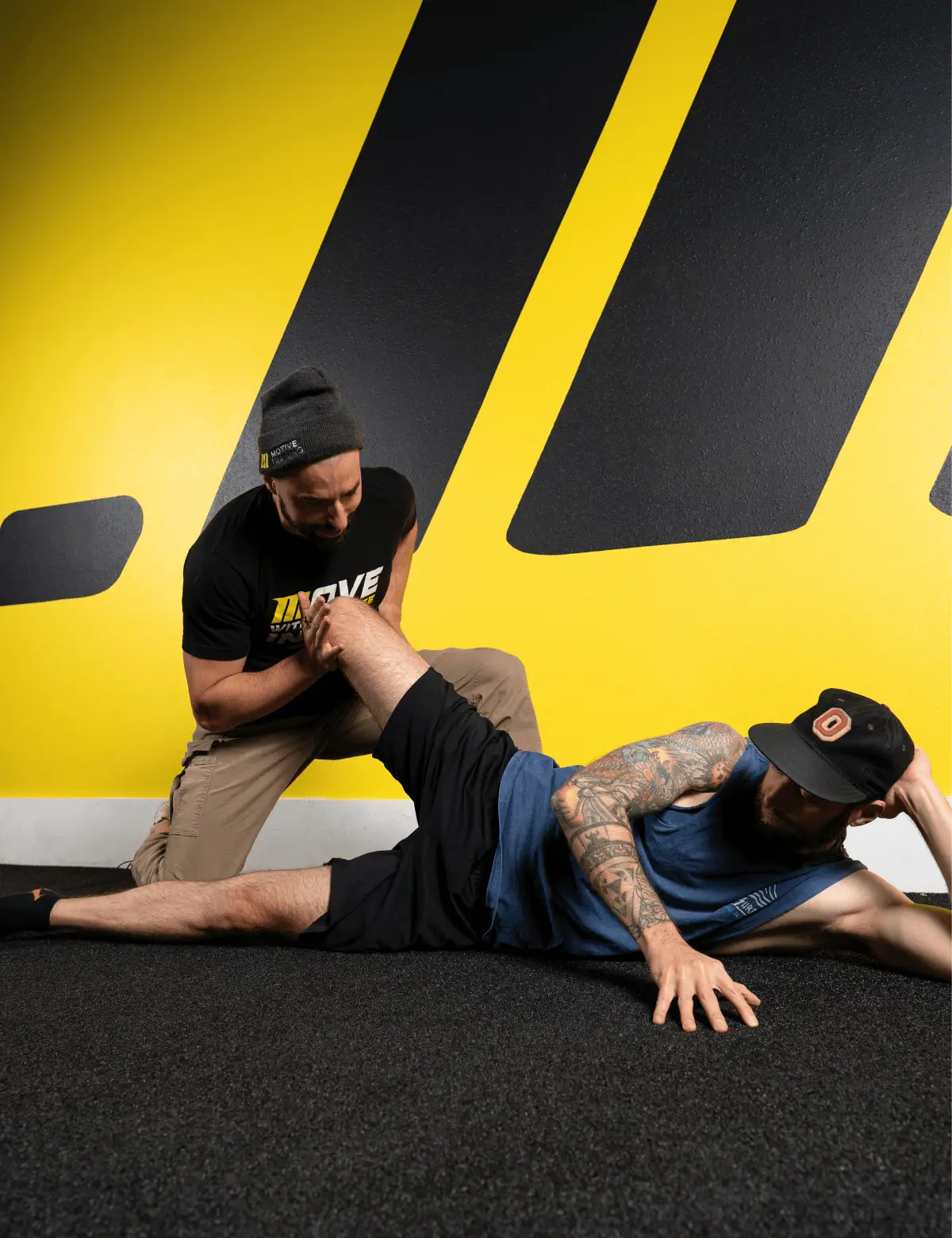
A common pattern walks into an assessment looking like this. Someone has worked a hip flexor stretch for months, the position feels easier than it used to, and they are sure the tissue has changed. Then they get tested for active range and the number has barely moved. The stretch raised their tolerance for the position. It never built the control that would let them use it. Months of effort, very little they can actually train with.
FRC gives us a way to find that gap and close it. We assess what each joint can do actively, locate where strength and control are missing, and build training that addresses that joint instead of working around it. A shoulder that’s been guarded for two years stops hurting once it has real end-range strength behind it, not because the pain was mysterious to begin with. We treat that as a result worth expecting, not a promise, because it comes from understanding why the restriction existed and training the specific thing that resolved it.
04
How FRC fits a range of people
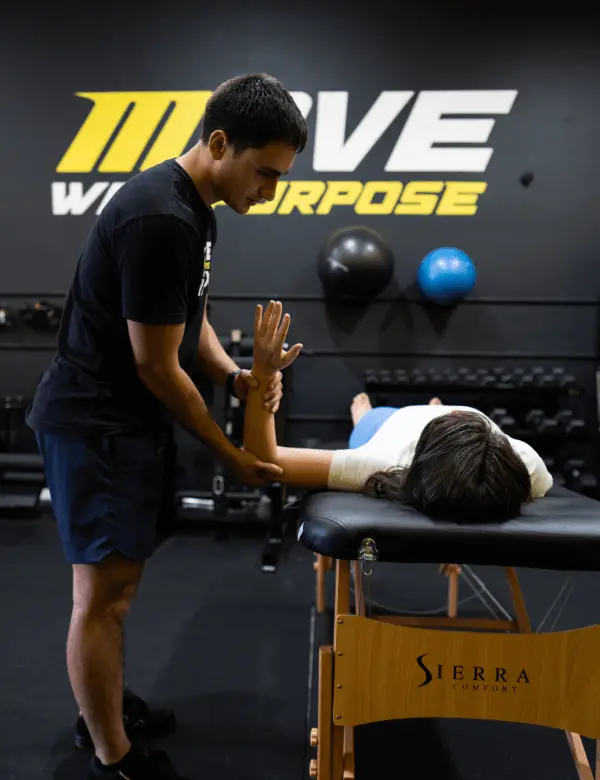
FRC is not a separate thing you do for ten minutes before the real workout. It runs through the whole session. The assessment tells us which joints are short on control, and that information shapes what you train and how you load it. A shoulder that cannot actively reach overhead does not get loaded overhead until it can. A hip missing internal rotation gets that range built and strengthened before it has to produce it under speed. The work is specific, and it changes as your joints change.
The method does not change based on who is using it. What changes is the starting point. Someone managing persistent pain, an athlete carrying an old injury, and a desk worker who wants to stay durable all get assessed the same way and trained from what the assessment shows. The system stays consistent. The plan is built around the joints in front of us.
.Doh9Ua2P_ZFkKhh.webp)
One system, every program
Where FRC shows up at Motive
FRC is the model underneath every program here, not a separate offering. In one-on-one personal training, it's the framework behind every exercise selection, the reason a shoulder that can't actively reach overhead doesn't get loaded overhead until it can. In KINSTRETCH, it's the same system trained in a group setting, live in Austin through our stretching classes or anywhere through KINSTRETCH Online, joint-by-joint work built for a room instead of a single client.
The Motive Movement & Mobility Assessment is where we measure it directly, joint by joint, so the first session of training starts from what we found. Whichever program someone starts with, the assessment underneath it is the same one.
FAQ
Questions about FRC
- What is Functional Range Conditioning?
-
Functional Range Conditioning is a joint training system developed by Dr. Andreo Spina for building mobility you can control. It trains joints at the edges of their range, where most programs never go, with the goal of taking range you can only be placed into and making it range you can reach and use on your own. At Motive it sits underneath every program we run.
- Is FRC the same as stretching?
-
Most of the research on static stretching points to gains in stretch tolerance, meaning the nervous system gets more comfortable with the sensation, which helps explain why those gains fade once the stretching stops. FRC uses stretch positions as a starting point and then loads them with hard isometric contractions, giving the nervous system evidence that you have control at that length. The range you end up with is range you can produce force in.
- Is FRC evidence-based?
Its central claims hold up well. The gap between passive and active range and the nervous system's role in guarding it both have solid research behind them, and so does isometric loading at long muscle lengths. Some of the specific protocols have been studied less directly, and we've laid out where the evidence is strong and where it thins in our breakdown of the research behind FRC.
- What are CARs?
Controlled Articular Rotations take a joint through the largest rotation it can make under active control, slowly and with full-body tension. They're the daily practice in FRC, used to maintain range and as a running self-assessment of what each joint can do that day. Our complete guide to CARs covers technique joint by joint.
- What are PAILs and RAILs?
PAILs and RAILs are isometric contractions performed at end range. PAILs contract the tissue being stretched; RAILs contract the opposite side to pull deeper into the position. Together they build strength at the edge of a joint's range and give the nervous system a reason to let you use it. The full explanation of PAILs and RAILs walks through how each works.
- How often should I do FRC?
CARs every day, which takes ten to fifteen minutes for the full body. Targeted end-range work for one or two priority joints two to three times a week, with a day between sessions for the same joint. We've laid out how to structure that week in our guide to building an FRC routine.
- How long does it take to see results?
-
Joints usually feel different after a single session, mostly because stretch tolerance changes fast. Active range that holds up under load takes longer. From what we've seen, it's a matter of weeks of consistent work on a joint before the change is measurable and stays put, and the bigger the gap between passive and active range, the longer it takes to close.
- Can FRC help with joint pain?
-
Restricted or poorly controlled joints often show up alongside recurring pain, and training control into those joints is a large part of how we work with people in pain. FRC is a training system, though, and it can't tell you why a specific joint hurts. If pain is what brought you here, start with an assessment so the training is aimed at something measured.
- Can I do FRC at home?
Yes. CARs need no equipment, and most of the targeted work needs very little. KINSTRETCH Online is FRC in class form, taught by our coaches, for $24 a month. If you're in Austin, the studio class adds a coach in the room correcting you in real time.
Further Reading
Functional Range Conditioning
FRC develops strength and control at the outer limits of joint motion. It converts passive range into something your body can actually use. The results show up as less pain, better movement under load, and a body that holds up over time. Read some of our blogs to see how we apply FRC in practice.
- Research
Is FRC Evidence-Based? What the Research Actually Says
FRC makes specific claims about the nervous system, passive stretching, and end-range loading. Here's how those claims hold up against peer-reviewed research.
Read Article - Getting Started
Functional Range Conditioning for Beginners: A Clear Starting Point
FRC gets introduced the wrong way, through extreme positions and unfamiliar terms that make it look advanced. Here's how it actually works for someone starting from zero.
Read Article - FRC
Functional Fitness: Evolving Past Pattern Training
Is the squat really the best test of your hips, knees, and ankles? A case for measuring function by what joints can control, not which patterns you can perform.
Read Article
Next Step
Not sure where to start?
Tell us what you're working toward and what you're dealing with. A short call is the best place to begin if you're interested in personal training, stretching classes, online mobility training, or if you just want guidance on the right next step.
Many people reach out because something hurts, training has stalled, or they want more structure than a typical gym provides. Others want experienced coaching and a clear plan. A short call lets us understand your goals, training background, and any limitations so we can point you toward the right option.