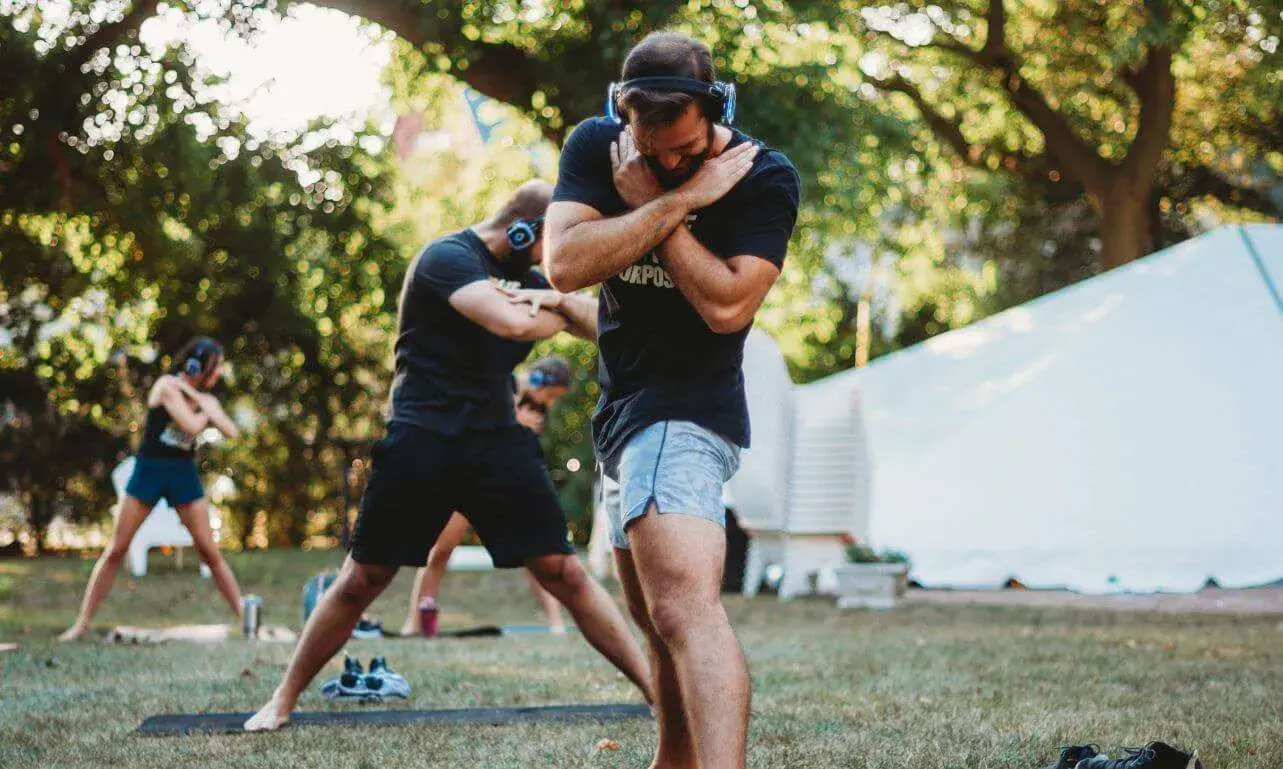
For the last year and a half, while Motive Training ATX was being built, I worked at a local gym in South Austin. The gym was excellent, filled with passionate people chasing personal records in powerlifting, strongman, and Olympic lifting. But one thing was always missing: mobility training. Few people took the time to assess how their joints actually moved before adding more weight to the bar. It wasn’t surprising, but it was revealing.
Mobility is one of the most underappreciated aspects of fitness, even though it’s fundamental to long-term performance and pain-free living. Many people think mobility training is just “stretching,” but that’s a major misconception. At Motive Training, mobility training involves learning how to move more effectively, followed by strengthening within that movement.
By building mobility into your training plan, you can enhance performance, improve movement efficiency, and protect yourself from injury. If you’re looking to train this way in South Austin, that’s exactly what we do every day.
What Is Mobility Training?
Mobility training is the practice of improving your body’s active range of motion—the space you can control, not just reach. It focuses on strengthening joints through their full range, building both flexibility and stability in the process.
Unlike static stretching, mobility work trains strength at every angle. It uses techniques such as Controlled Articular Rotations (CARs), end-range isometrics, and eccentrics to help joints move freely and resist load without pain.
At Motive Training, mobility training is built on principles from Functional Range Conditioning (FRC), a system designed to develop joint health and control. FRC bridges the gap between rehabilitation and performance—teaching you to create, strengthen, and maintain usable range in every joint.
When you move better, you perform better. That’s why mobility training is the foundation of everything we do.
Why Mobility Matters
Mobility training isn’t just about flexibility; it’s about control, resilience, and long-term health. Every movement you perform—lifting, running, sitting, or standing—relies on how well your joints move. Here’s why mobility deserves your attention.
Optimize Performance and Prevent Injuries
Good mobility allows you to get into stronger, safer positions during exercise. If you can’t reach full hip flexion or shoulder rotation, your body compensates elsewhere—often the lower back or neck—and that’s when pain begins.
Improving joint range of motion helps you express more strength through better mechanics. For example, expanding your ankle mobility improves your squat depth, while better shoulder rotation leads to more efficient pressing and pulling patterns.
By training mobility, you make your joints more adaptable. That adaptability protects against overuse injuries, especially when paired with proper strength training. When the tissues around your joints can handle more load, you move with greater confidence and less discomfort.
Counteract a Sedentary Lifestyle
Even in active cities like Austin, most people spend long hours sitting at a desk, in a car, or staring down at their phones. Over time, this sedentary pattern leads to restricted hips, stiff spines, and a general loss of movement variability.
Mobility training reverses those effects. It doesn’t just stretch tight muscles; it retrains the nervous system to move joints through their full potential. At Motive Training, we teach clients to incorporate daily CARs routines into their daily routines to keep every joint—from your neck to your ankles—moving well, especially after long workdays.
Small, consistent mobility exercises can help undo years of stiffness and restore your ability to move freely again. It’s not about perfect posture—it’s about adaptability.
Improve Everyday Movement
The benefits of mobility go beyond the gym. Getting out of bed, picking something off the floor, or carrying groceries all require controlled joint motion. As we age, mobility becomes a crucial factor in determining independence versus limitation.
Functional mobility training strengthens the tissues and neuromuscular control needed for everyday tasks. It helps people feel less “old” and more capable. For older adults, mobility training can improve balance, coordination, and confidence—making movement something to look forward to, not fear.
Methods We Use to Build Mobility
There are many ways to train mobility effectively, but not all methods are created equal. At Motive Training, we focus on evidence-based approaches designed to create lasting change. Here are some of the tools and techniques we use to help South Austin clients move better.
Eccentric Training
Eccentric work involves strengthening muscles as they lengthen. It’s a powerful way to increase flexibility and tissue capacity at the same time. Research shows that eccentric loading promotes better tendon health and muscle remodeling, particularly in the hips, hamstrings, and shoulders.
In practice, this might look like slowly lowering into a deep hip hinge or gradually lengthening your hamstring under load. These movements not only expand range but teach your body to control it—a critical difference from passive stretching.
Loaded Stretching
Loaded stretching combines strength training and mobility. By applying resistance in stretched positions, you teach your joints to handle force at their end ranges. Over time, that creates more resilient tissue and a wider range of motion.
For instance, we might coach a client through a loaded pigeon variation to strengthen the glutes and external rotators at deep hip angles. The key is control—building strength, not just passively hanging out in a position.
Positional Isometrics
Positional isometrics target weak links within your range of motion. Instead of holding a passive stretch, you actively contract muscles in challenging positions.
If your hamstrings struggle to engage during a deep knee bend, we’ll use techniques like passive range holds (PRH) to train strength in that position. This improves tissue recruitment and helps you “own” your end range—making your joints stronger where they used to be vulnerable.
The Role of Functional Range Conditioning (FRC)
FRC is the foundation of our approach to mobility. It’s a system built on the scientific principles of joint development, combining mobility, flexibility, and strength into a single method.
At its core, FRC focuses on improving the functional capacity of each joint. We assess limitations using the Functional Range Assessment (FRA), identify where movement is restricted, and prescribe exercises that target those exact limitations.
FRC doesn’t stop at flexibility—it builds strength in the ranges you create. This “expand and reinforce” model leads to more permanent mobility gains and better transfer to real-world movement. Clients often notice improvements in pain, performance, and coordination after just a few weeks of consistent training.
Mobility Training in South Austin
South Austin has an active, outdoorsy culture. People run trails at Lady Bird Lake, cycle through South Congress, and take advantage of the Greenbelt. But the same activity that keeps us fit can also highlight where our bodies are limited.
That’s where mobility training fits in. It’s the bridge between strength and freedom of movement. At Motive Training Austin, we work with everyone—from athletes to parents to professionals—to restore control, eliminate pain, and help them move better for life.
Every session begins with assessment and intention. We identify what your joints can and can’t do, then teach you how to build strength where you need it most. The goal isn’t to do more—it’s to do it better.
Our programs blend FRC principles, KINSTRETCH classes, and personalized coaching to help you develop lasting mobility. If you’re ready to move with purpose, it starts here in South Austin.
References
Written by

Brian Murray, FRA, FRSC
Founder of Motive Training
Motive Training is a coaching studio in South Austin built around assessment, joint health, and strength you can use. Train with us in the studio, come to a KINSTRETCH class, or work through the progressions in KINSTRETCH Online.