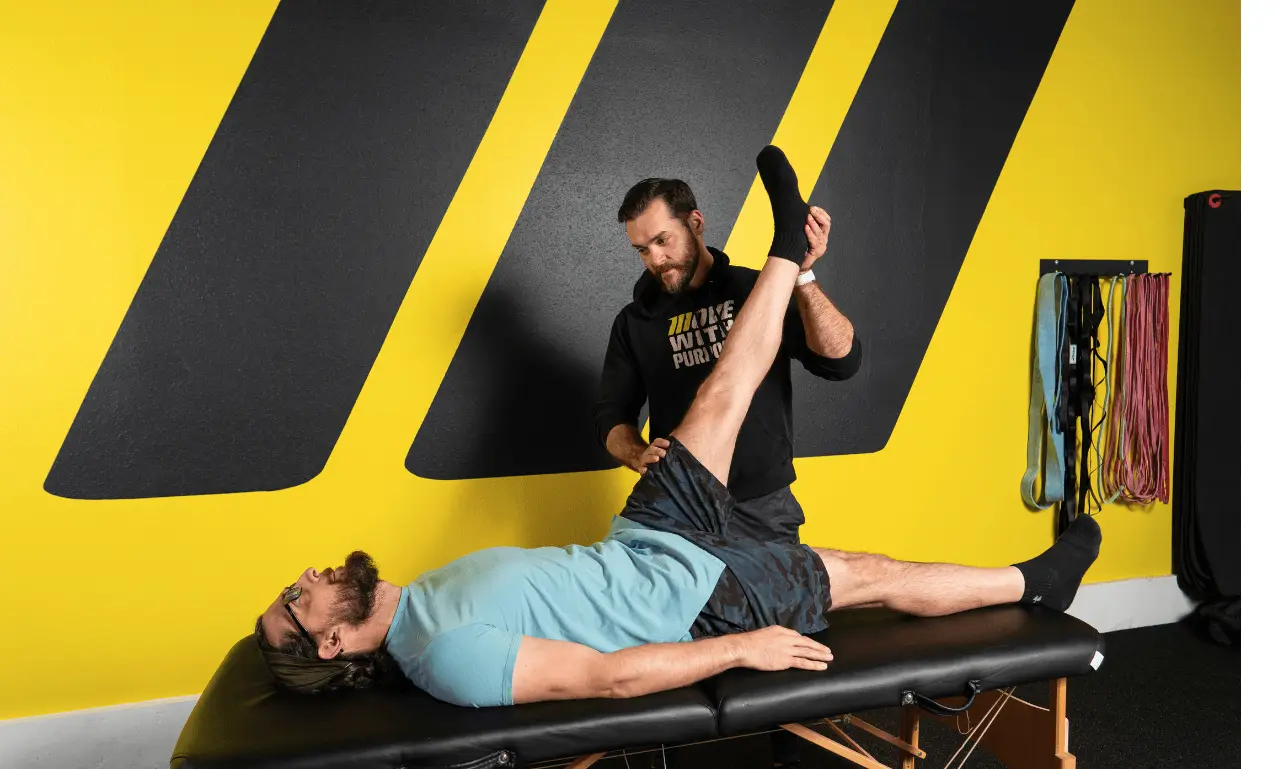
Where to Start With Functional Range Conditioning
Functional Range Conditioning tends to get introduced the wrong way.
Most people encounter it through extreme-looking positions, unfamiliar terminology, or clips that make it look like a system reserved for advanced athletes. For beginners, that framing creates friction before understanding ever has a chance to develop.
In practice, FRC is not about pushing joints into dramatic ranges. It’s about improving how well your joints function inside the ranges you already have, then expanding them gradually and with control. If you want the full picture of how the system works, our Functional Range Conditioning page lays out the core ideas without assuming prior experience.
At Motive Training, we use FRC principles with beginners every day, often with people who have never done formal mobility work before. The goal isn’t to complicate training. It’s to make movement more predictable, durable, and easier to build on.
Why Beginners Often Benefit the Most
There’s a misconception that mobility systems are something you earn after years of training. In reality, beginners often see the biggest return from FRC-based work.
Most beginners:
- haven’t trained joint control directly,
- spend long periods of the day in limited positions,
- rely on strength or flexibility without coordination between the two.
FRC provides a framework for understanding movement rather than guessing. It introduces intent, control, and awareness before intensity becomes the focus. That foundation tends to make everything else (strength training, conditioning, sport) feel more stable over time.
The Role of CARs in FRC
One of the first tools beginners encounter in Functional Range Conditioning is Controlled Articular Rotations, or CARs.
CARs are slow, intentional joint rotations performed under tension. They serve two purposes. First, they help identify where a joint moves well and where control drops off. Second, they act as a daily input to maintain joint health and reinforce usable range.
CARs aren’t meant to be rushed or treated like a warm-up circuit. They’re a way to build communication between the nervous system and the joint itself.
If you want to understand why CARs matter beyond flexibility, this deep dive into Controlled Articular Rotations explains how and why they’re used.
What Makes FRC Different From Stretching
One of the most common points of confusion for beginners is assuming FRC is just another form of stretching.
It isn’t.
Stretching often focuses on increasing passive range: how far a joint can be moved without effort. Functional Range Conditioning focuses on active range: how much of that motion you can control and produce force in.
That difference matters because joints are only as resilient as the ranges they can actively own. This is where concepts like end-range mobility training become important. Strength and control at the edge of motion are what allow joints to tolerate real-world demands.
How We Introduce FRC at Motive Training
At Motive Training, Functional Range Conditioning isn’t treated as a separate discipline. It’s integrated into how we assess movement, choose inputs, and progress training.
For beginners, that means:
- identifying which joints lack usable range,
- applying targeted inputs to improve control,
- layering strength and movement complexity only when tolerance supports it.
This approach keeps mobility work relevant instead of turning it into something abstract or disconnected from training goals.
For those who want a structured group-based way to apply these principles, they’re also reflected in KINSTRETCH classes, where joint control is trained with progression and intent.
Starting Without Overcomplicating Things
Beginners don’t need to learn everything at once.
A solid starting point is understanding how your joints move today, learning how to apply controlled effort, and building consistency with simple inputs. From there, capacity expands naturally.
This is the same philosophy behind KINSTRETCH Online, where FRC-based concepts are introduced progressively without overwhelming volume or complexity.
Who Functional Range Conditioning Is For
Functional Range Conditioning works well for beginners who feel stiff, inconsistent, or unsure how to approach mobility. It’s also useful for lifters and athletes who want better joint control without chasing extremes.
You don’t need to be flexible. You don’t need to be advanced. You just need a willingness to move with intent.
Why This Foundation Matters Long-Term
The biggest benefit of Functional Range Conditioning isn’t immediate change. It’s durability.
When joints are trained to move well and tolerate load across a variety of positions, setbacks become less frequent and progress becomes easier to maintain. For beginners, that foundation sets the tone for everything that follows.
Written by

Brian Murray, FRA, FRSC
Founder of Motive Training
Motive Training is a coaching studio in South Austin built around assessment, joint health, and strength you can use. Train with us in the studio, come to a KINSTRETCH class, or work through the progressions in KINSTRETCH Online.