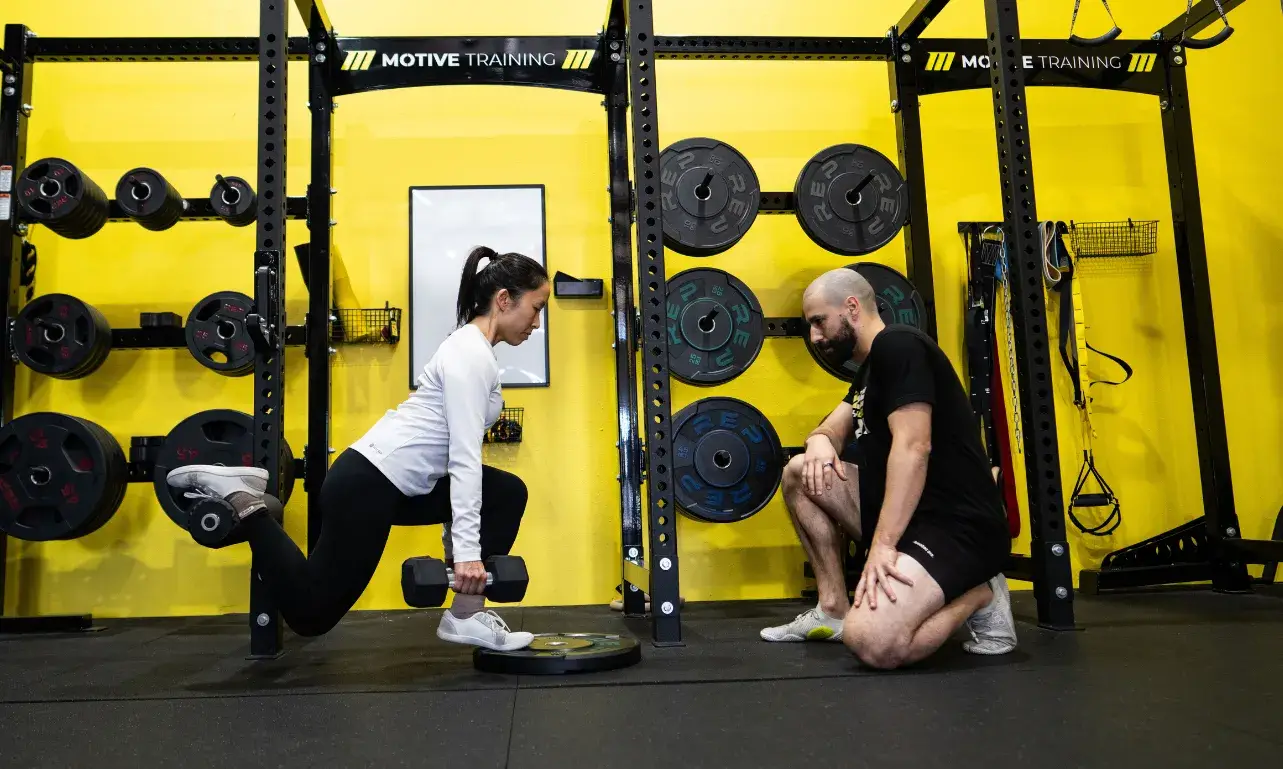
Personal training in Austin is a crowded market. A quick search will turn up large chain studios, boutique studios, independent trainers working out of commercial gyms, in-home trainers, and the directory sites that aggregate all of them. On the surface, most of them are selling the same thing: a trainer, a program, some structure, and the promise that you will get fitter than you would on your own.
That is true at the floor level. Almost any reasonably qualified trainer can help someone who has been sedentary get stronger, lose weight, and feel better, at least for a while. What is harder to see from the outside is what separates a trainer who can produce a result for two months from a coach who can produce results that hold up across years, life changes, injuries, and the slow drift of getting older.
After seventeen years of coaching in this city, the gap between those two outcomes has gotten clearer to me, not narrower. This article is what I would tell a friend trying to figure out which kind of personal training they are actually looking for, and how to evaluate the options before they hand over a card.
What most Austin personal training is offering
The dominant model in Austin, like most cities, is what I would call gym-floor personal training. A trainer meets you at a commercial facility, walks you through a workout, counts reps, encourages you, and sends you home. The exercises tend to be the conventional set: squats, deadlifts, lunges, presses, rows, some core work, maybe some cardio. The programs are often template-based, built around the trainer’s preferred style, and adapted in real time based on what you can or cannot do that day.
There is nothing wrong with this. For someone who is new to training, or has been away from it for years, or just needs accountability and a reason to show up, this model works. You will get stronger. You will probably look and feel better in the first few months. The big chain studios in Austin, places like Life Time, Castle Hill, and the larger boutique gyms, generally execute this model competently, with clean facilities, a deep bench of trainers, and the kind of polish you would expect from a well-run business.
The independent trainers and smaller studios offer a more individualized version of the same model. You get the same trainer each session, the programming is more personalized, and the attention is higher. Quality varies more from one independent trainer to the next, but the ceiling is also higher because the relationship is closer.
The reasonable version of this approach is real. A lot of people genuinely need it. The limits are not obvious until something goes wrong.
Where the standard model leaves people short
The first thing the standard model does not do is assess. Most trainers will run an intake conversation, ask about goals and injury history, and maybe do a basic movement screen on the first session. Then they move on to training. The assumption is that if you can perform the lift, the lift is appropriate for you. That assumption holds for most healthy people most of the time. It stops holding the moment something is off.
The second thing the model does not do is treat mobility seriously. Mobility, in most personal training, is the five minutes of foam rolling and stretching at the start of a session. It is not trained as a discipline, it is not measured, and it does not change much over time. For people whose limitations are mobility-related, and that is more people than the industry acknowledges, the training is treating symptoms while leaving the underlying problem in place.
The third thing the model does not do is adapt structurally as you change. Programs evolve in surface ways: heavier weights, new exercises, different splits. But the underlying logic stays the same. If you have been training at a generic gym for five years and you still cannot squat to depth without your lower back rounding, or you still get the same shoulder ache after every overhead session, or your hip flexors are still tight after years of stretching, the program never addressed what was actually limiting you.
These limits become visible in three places. The first is plateaus that do not respond to more volume or more intensity. The second is recurring tightness, pain, or injury that comes back no matter how many times you take time off and start again. The third is the long arc. Most people who train for ten or twenty years in the generic model end up moving worse, not better, even though they are stronger on paper. Whatever they built was not built on a foundation that could absorb the next two decades.
What to actually look for
The shorthand I would offer, if someone wanted to evaluate a trainer in Austin without spending a year learning the field, is this: what does this person do before they start training me?
A real assessment is not a fitness consultation. It is a structured evaluation of how your joints actually move, where mobility is missing, where motor control breaks down, and what compensations you have built around all of it. The Functional Range Assessment is one example of a credentialed system that does this; there are others. The question is not which system, but if the trainer has a system at all, and if they can explain what they found and what it means for your program.
The second thing to look for is credentials that mean something. The baseline certifications, NASM, ACE, and NSCA, establish a floor. They do not separate one trainer from another, because most working trainers have one or more of them. The credentials that signal a different level of investment are post-certification specialty work: Functional Range Conditioning, KINSTRETCH instructor certification, McGill methods, PRI, Postural Restoration Institute, the various manual therapy and movement specialist certifications that require ongoing study. None of these are required to be a good trainer. All of them indicate that the trainer kept learning past the point most trainers stop.
The third thing to look for is a trainer who can explain their thinking. Ask why they chose a particular exercise. Ask what they are trying to develop. Ask what would change if you came in with a tight shoulder, or a tweaked back, or a pre-existing knee issue. A coach who has thought carefully about training can answer those questions in detail. A trainer running a generic program will give you answers that sound like marketing.
The fourth thing is to pay attention to how mobility is treated. If mobility work is just the warm-up, it is not being trained. If it is integrated into the programming with intent, dosed correctly, and progressed over time, the trainer is taking it seriously. The distinction matters more than it looks like it should, because mobility work that is treated as filler will stay filler, and the gains people most want from training, moving well into their fifties, sixties, and beyond, depend on mobility being part of the actual program.
Where Austin’s specifics come in
The Austin demographic is unusual in a way that makes assessment-first coaching more relevant here than it might be in other cities.
The tech workforce is one piece of it. Most of the people I see in the studio sit at a desk for nine hours a day. They train hard outside of work, because they are smart and they know they should, but they are training on top of a body that has spent most of its waking hours in flexed, forward-loaded, low-variability positions. The standard personal training model does not account for that. The squats and deadlifts are loading patterns that the desk has already pre-restricted. You can absolutely get stronger that way. You will not get freer, and the underlying restriction will keep generating downstream problems.
The endurance and racket sport population is another piece. Austin runs, cycles, and plays pickleball. All three are repetitive, asymmetric, and pattern-driven. They do not, on their own, build the mobility or balanced strength that holds up across decades of doing them. The personal training that supports those athletes well is not “let’s do squats and deadlifts to round out your cycling.” It is training that specifically addresses what those sports do not develop and what they overdevelop.
The aging-into-fitness population is the third piece. A lot of the people I work with came to training in their forties or fifties because something started hurting, or they realized they needed to take it seriously, or both. That population is poorly served by the generic strength template, because the assumptions baked into it, clean joints, available range of motion, no compensation patterns, do not apply. These are the people for whom assessment-first coaching is not a luxury. It is the only approach that is honest about what their body is actually showing up with.
What we do at Motive
The reason I built Motive Training the way I did is because the model I just described is the one I would want as a client, and it was not what I was seeing offered in Austin. Everyone on staff holds FRC certifications, and several of us hold KINSTRETCH Level II, the highest level offered. Every new client starts with a structured movement assessment before we build a personal training program, because we want to know what we are actually training before we start training it. Mobility is not the warm-up; it is integrated into the program at the level of joint capacity, end-range strength, and motor control. The clients who want a deeper mobility-focused option also use our KINSTRETCH classes, which run on the same principles in a group setting.
That approach is not for everyone. Someone who wants a high-energy class environment with new music and a new format every week is going to be happier at a different gym. Someone who wants to be pushed hard, sweat, and not think about their joints is also going to be happier somewhere else. What we offer is the more deliberate version of personal training. The clients who stay with us tend to be the ones who want to understand what they are doing and why, who are training for the long arc rather than the next twelve weeks, and who are willing to spend the time on the foundational work that pays off in years three, five, and ten.
If that sounds like the kind of training you are looking for, the best place to start is with an assessment. It is the only honest way for either of us to know if we are a fit for what you actually need.
A simple framework for evaluating any trainer in Austin
A few questions to ask before you book, applicable to any trainer in the city.
What does your assessment process look like, and what do you do with the results? You are looking for a structured answer, not “we will get to know you in the first few sessions.”
How do you handle mobility? You are looking for integration into the program, not five minutes of stretching at the top of the hour.
What continuing education have you done in the last two years? You are looking for specifics. A coach who has done real post-certification work will name it without hesitation.
How would you change my program if I came in next week with a tight shoulder, or back pain, or a sprained ankle? You are looking for thinking, not a script.
Why this exercise, today, for me? You are looking for an answer that connects to your actual situation, not “it’s a great compound lift.”
The trainers who can answer those questions well are the trainers worth your time and money in this city, regardless of which studio they work out of. The ones who cannot are probably fine for general fitness and not the right call for anything more specific than that. Knowing the difference before you book saves you the year it would otherwise take to figure it out from the inside.
Written by

Brian Murray, FRA, FRSC
Founder of Motive Training
Motive Training is a coaching studio in South Austin built around assessment, joint health, and strength you can use. Train with us in the studio, come to a KINSTRETCH class, or work through the progressions in KINSTRETCH Online.