Mobility Classes in South Austin
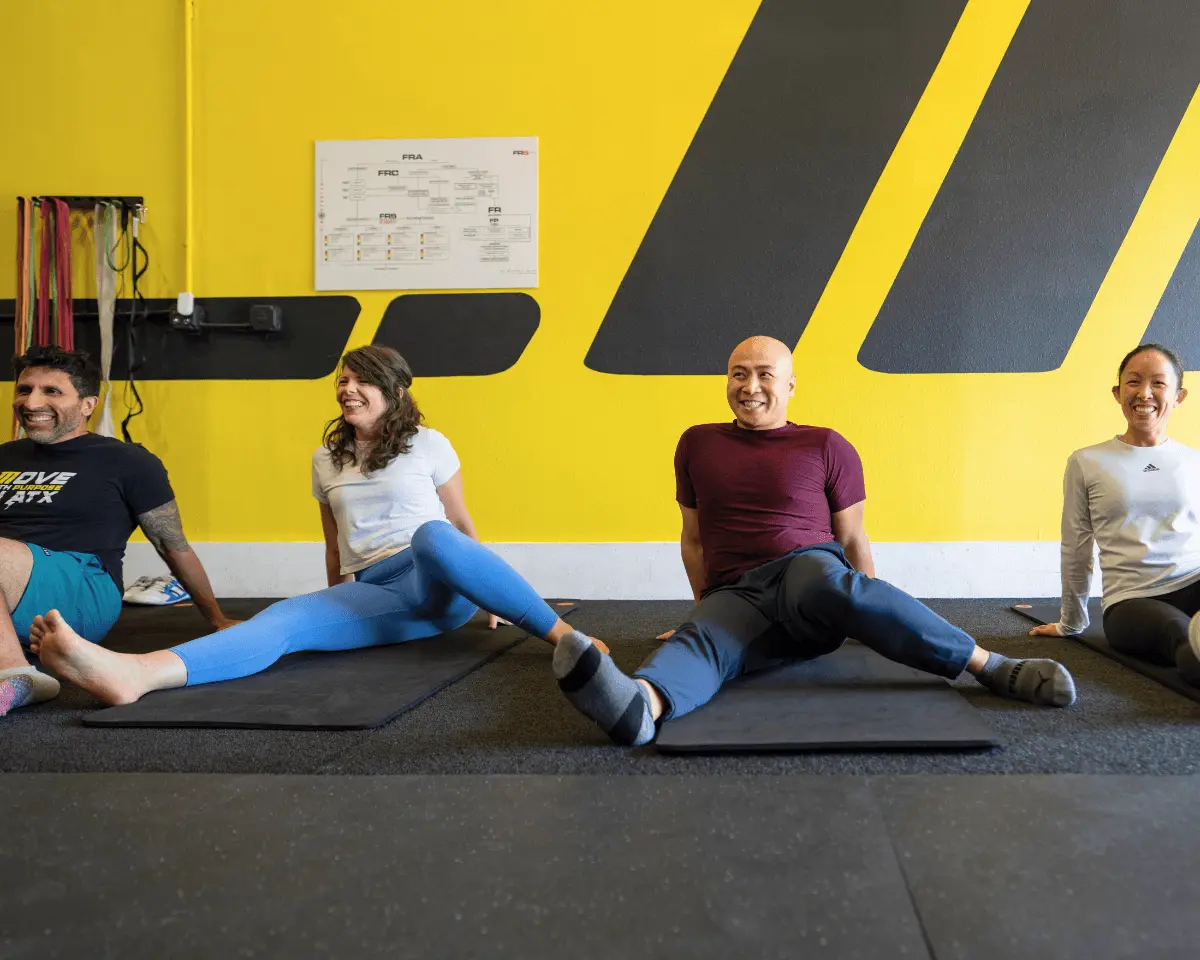
Most people who feel tight have more range than they can use. The hip bends further when somebody else moves it than it does when you move it yourself, and that difference is the thing that makes a body feel stuck.
Our mobility classes train that difference directly. You work at the outer edge of what a joint can do, under your own strength, in a room where somebody is watching to make sure the range you gain is range you can produce again tomorrow.
Five classes a week at 714 Shelby Ln in South Austin. First one is free.
01
What Improves Mobility
Stretching a muscle and holding it teaches your body to tolerate the position. That is a real change and it is worth something, and it is also why the tightness comes back a few days later. Nothing about the stretch taught you to produce that range on your own, so your body has no reason to keep it.
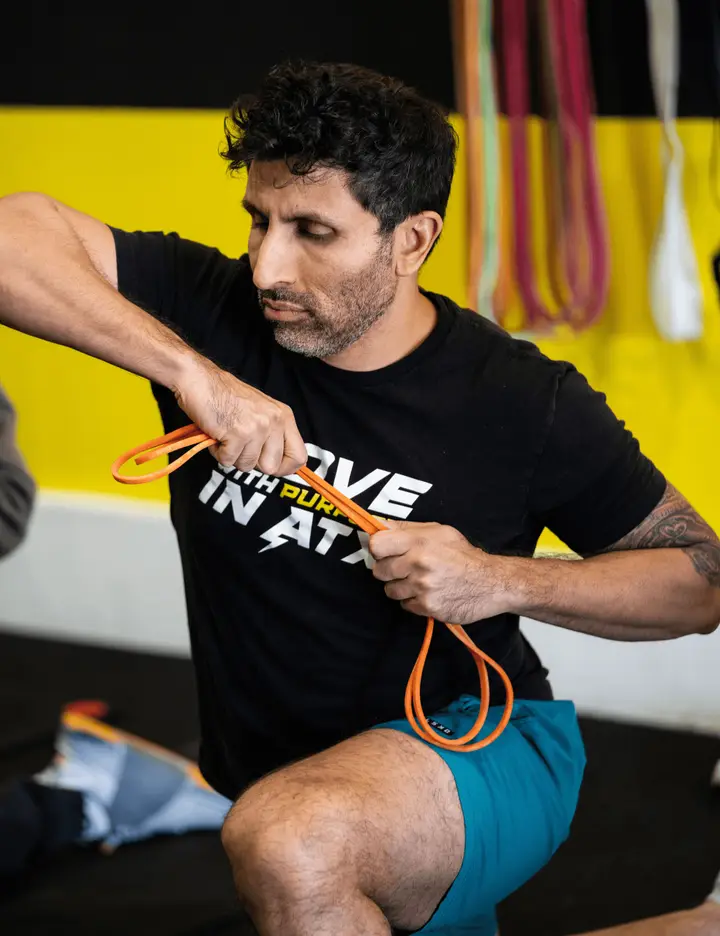
The work in these classes goes the other way. You get into a position at the edge of what a joint can do, and then you contract into it. You push against the position rather than sinking into it. That is uncomfortable in a way passive stretching is not, and it is the part that makes the range stick, because you are building strength at the end of a range instead of asking permission to be there.
What that looks like across an hour:
- Slow, controlled circles at each joint, taken as far as you can take them without the rest of your body helping. This is how we find out what you can move on your own, and how you find out what you have been compensating for.
- Loaded positions, where you hold a shape and produce force in it rather than relaxing into it.
- Rotation and coordination work, where the range you just built gets connected to how you move.
02
What a Class Feels Like
It is an hour, and it is harder than it looks from outside.
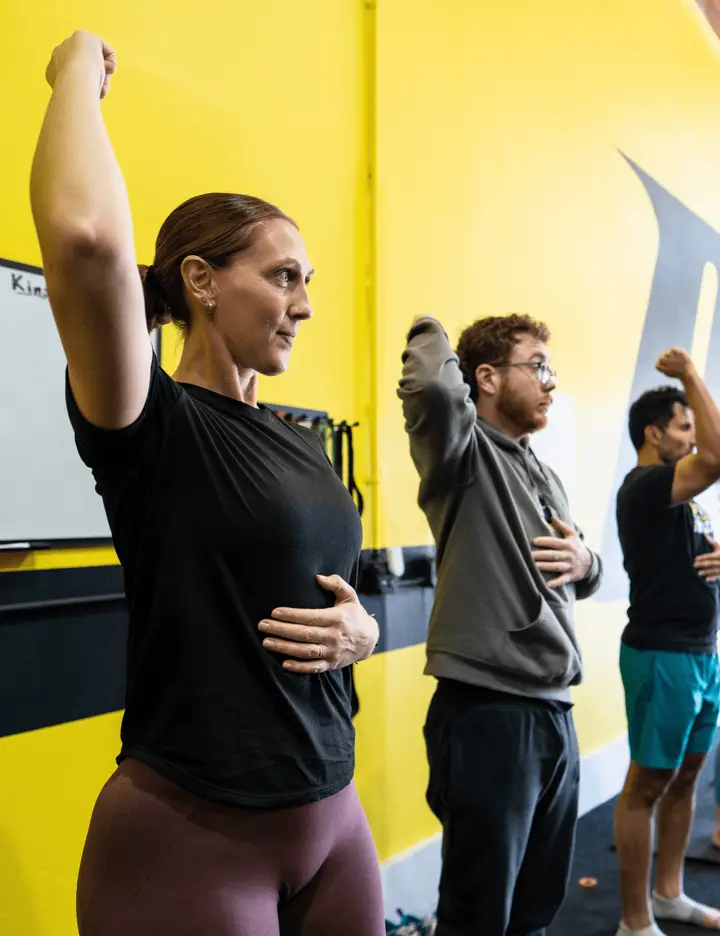
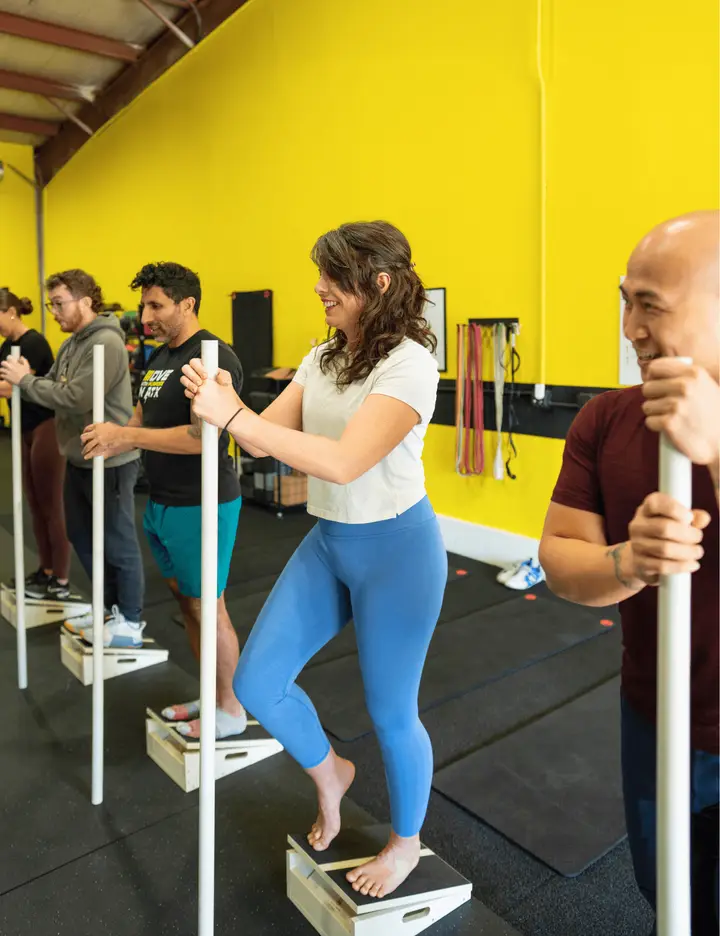
Classes open with joint work, taken one joint at a time. Some weeks that is twenty minutes on ankles and toes, which sounds absurd until you find out how little control you have down there. From there the class moves into positions held under load, and then into movement that uses what you just opened up.
You will shake. Most people do, in the first few classes, in positions that look like they should be easy. That is not a fitness problem. It is a joint being asked to produce force somewhere it has not been asked before.
You will probably leave sore in a place you did not expect. That soreness is the clearest feedback in the whole system, because it tells you exactly where the range you were not using has been sitting.
Nobody is going to ask you to touch your toes in front of the room.
03
Why This Works Better in a Group
Mobility work is the easiest thing in fitness to do badly on your own, because the mistakes are invisible from the inside.
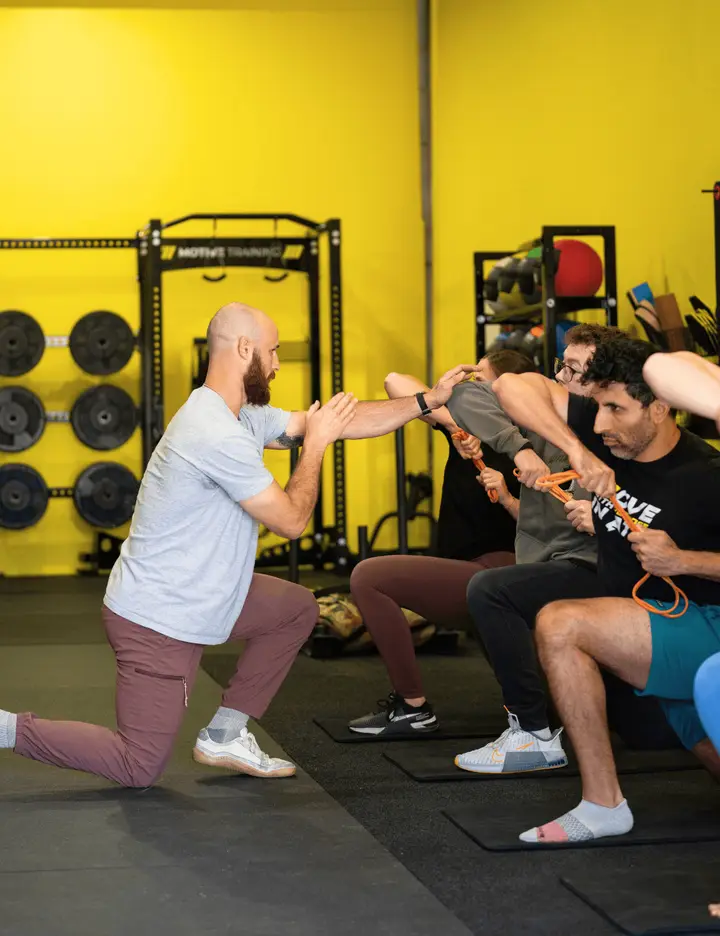
You cannot see your own compensations. When a shoulder runs out of range, the ribs move, or the low back arches, or the neck shifts, and from where you are standing the movement feels complete. A coach watching from six feet away sees it in about two seconds. That single correction is often the difference between a year of mobility work that does nothing and eight weeks that changes something.
You also will not push hard enough alone. The intensity that produces change in these positions is uncomfortable enough that almost everybody backs off early when nobody is counting. In a room, you hold it.
Our classes stay small, closer to semi-private training than a standard group fitness format. Everybody in the room is working at their own range rather than matching a shape at the front, which is why a first-timer and somebody two years in can train the same class without either of them wasting the hour.
That last part surprises people. There is no level to reach before you are allowed in. The person with the most restriction in the room usually gets the most out of the hour.
04
How to Start
Come to a class. The first one is free, and an hour tells you more than any page will.
Most people land on two or three classes a week early on, then settle into a rhythm that fits around whatever else they are doing. Once a week still moves the needle, it just moves slower.
If something specific hurts, or one joint keeps flaring up, start with an assessment instead. An hour of measurement gives you a plan rather than a guess, and it means the class time you spend after that is aimed at something.
Bring water and clothes you can move in. There is parking on site at 714 Shelby Ln, Suite E, in St. Elmo, which is about ten minutes from most of 78704 and 78745 and twenty from downtown outside rush hour.
These classes run on a system called KINSTRETCH, built on Functional Range Conditioning. You do not need to know any of that to come to a class, but if you want the mechanism in detail, we wrote it up here.
FAQ
Common Questions
- Do I need to be flexible to start?
-
No, and the people with the most restriction usually get the most out of it. You are not being asked to hit a shape. You are being asked to work at the edge of your own range, wherever that edge currently is.
- What does a class cost?
-
Drop-in is $25. Unlimited is $129 a month. The first class is free, and if you already train with us one on one, unlimited is $69.
- How is this different from a stretching class?
-
A stretching class puts you in a position and asks you to hold it. This asks you to produce force in that position under your own strength, which is what makes the range durable rather than temporary. The work is also organized joint by joint rather than by muscle group.
- Where are you located?
-
714 Shelby Ln, Suite E, Austin, TX 78745, in the St. Elmo neighborhood just off South Congress.
- How often should I come?
-
Twice a week is where most people start noticing the range shows up outside of class. Once a week helps and moves slower. This is training rather than a fix, so consistency matters more than any single session.
Ready to move with purpose?
Take your first class today!