Many people start training with workouts they found online, programs from friends, or routines built for large group classes. These approaches can work for a while, especially in the early stages of training.
Eventually progress slows down.
Strength stops improving, certain movements start to feel uncomfortable, or workouts feel harder without producing better results. This is often the point where people begin looking for personalized strength training programs in Austin.
A personalized program is built around the individual. Instead of following a generic plan, the exercises, loading strategies, and progressions are designed to match how your body actually moves and what you are trying to achieve.
Why Generic Workouts Eventually Stall Progress
Generic workout programs are designed to work for as many people as possible. That means they cannot account for individual differences in mobility, joint capacity, injury history, or training background.
Two people can perform the same squat program and experience very different outcomes. One person may build strength quickly while another struggles with hip or back discomfort during the same exercise.
The difference is rarely motivation or effort. More often it comes down to how the program interacts with the individual body performing it.
A custom workout program in Austin takes these factors into account before training even begins.
Instead of forcing the body to adapt to a program, the program adapts to the body.
Personalized Training Begins With Evaluation
Effective coaching usually begins with understanding how a person moves. Without this step, program design is largely guesswork.
At Motive Training, many clients begin with a Functional Range Assessment, which measures how individual joints move and identifies areas where range of motion, strength, or control may be limited.
These measurements help determine which joints need more attention and which movements can be loaded safely.
Once those priorities are identified, exercises can be selected that improve both strength and joint function rather than reinforcing limitations.
You can learn more about this process through our guide to the Functional Range Assessment.
Building a Personalized Strength Training Program
A personalized strength program is not simply a list of exercises. It is a structured system designed to develop strength while improving the way the body moves.
Several factors influence how a program is built.
Movement Limitations
Joint restrictions often influence exercise selection. Limited hip mobility, for example, may change how squat variations are introduced early in training.
Instead of ignoring those limitations, programming addresses them directly while building strength around the positions the body can currently control.
Strength Goals
Some clients want to build general strength. Others want to improve performance in specific lifts such as deadlifts, presses, or pull-ups.
A tailored strength training program in Austin prioritizes the exercises and progressions that move those goals forward.
Injury History
Previous injuries frequently influence how a program is structured. Certain movements may need to be introduced gradually while others are temporarily limited.
A coaching-driven program allows adjustments to happen as the body adapts and improves.
One-On-One Coaching Makes Programming Work
Even the best program requires feedback and adjustments. This is where one-on-one personal training in Austin becomes valuable.
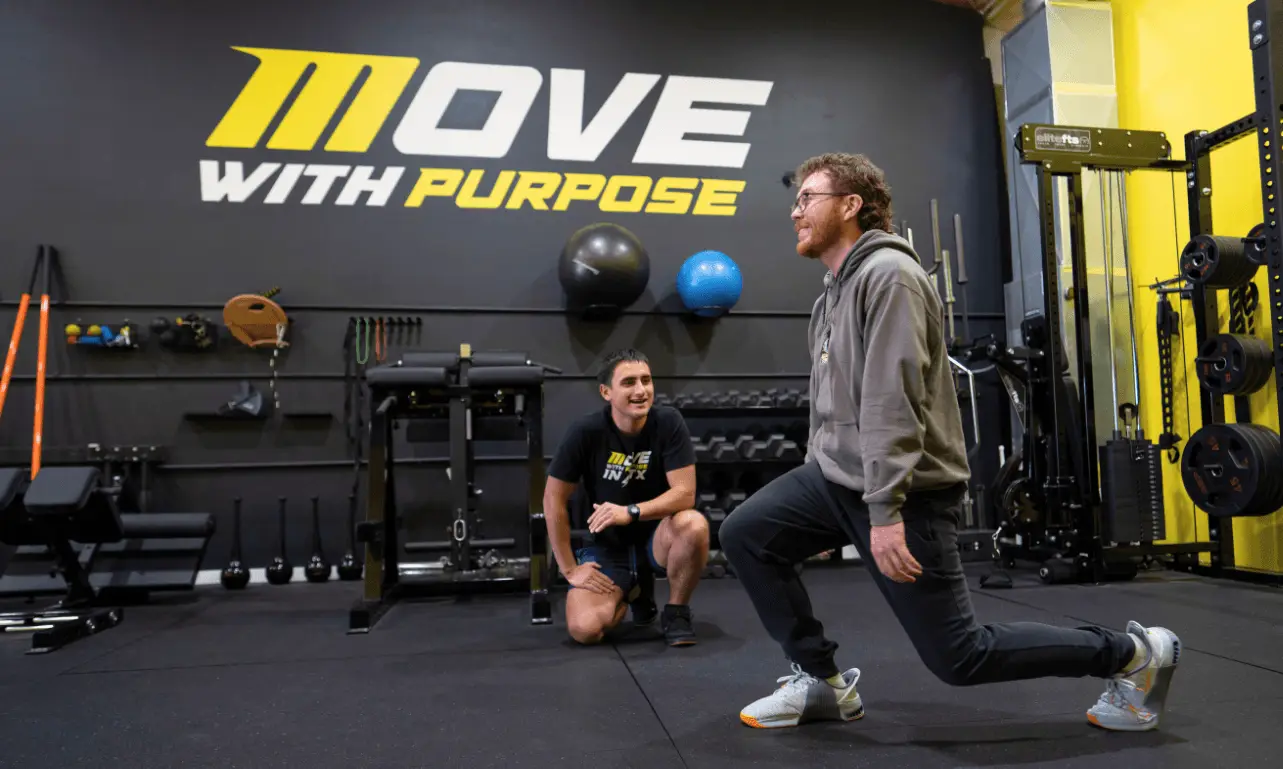
During personal training sessions, a coach can adjust technique, loading, and exercise selection based on how the body responds. Small adjustments often make a significant difference in both comfort and progress.
This feedback loop is difficult to replicate with prewritten workout plans.
Over time, personalized coaching allows training to evolve alongside the person performing it.
Strength and Mobility Should Develop Together
Strength training works best when it is supported by adequate joint mobility and control.
Many training programs separate these two elements. Mobility work is treated as a warm-up while strength training is treated as the main event.
In reality, the two influence each other constantly.
Improving joint mobility allows strength to be expressed through larger ranges of motion. Developing strength helps maintain those ranges of motion under load.
This is one reason many programs incorporate systems such as Functional Range Conditioning and KINSTRETCH, which focus on building strength within controlled joint ranges.
What Makes a Training Program Truly Personalized
A personalized strength program is defined less by the exercises it includes and more by how decisions are made.
Exercises are selected based on assessment data rather than trends.
Progressions are built around long-term development rather than short-term fatigue.
Adjustments happen as the body improves.
These elements create a training environment where progress can continue for years rather than months.
Personal Training Programs at Motive Training
At Motive Training in South Austin, personalized programs are built around evaluation, structured programming, and consistent coaching.
Instead of assigning the same workouts to every client, each program reflects the individual goals, movement patterns, and training history of the person performing it.
If you are looking for personalized strength training programs in Austin, you can learn more about our coaching process here:
Personal Training in South Austin
Written by

Brian Murray, FRA, FRSC
Founder of Motive Training
Motive Training is a coaching studio in South Austin built around assessment, joint health, and strength you can use. Train with us in the studio, come to a KINSTRETCH class, or work through the progressions in KINSTRETCH Online.