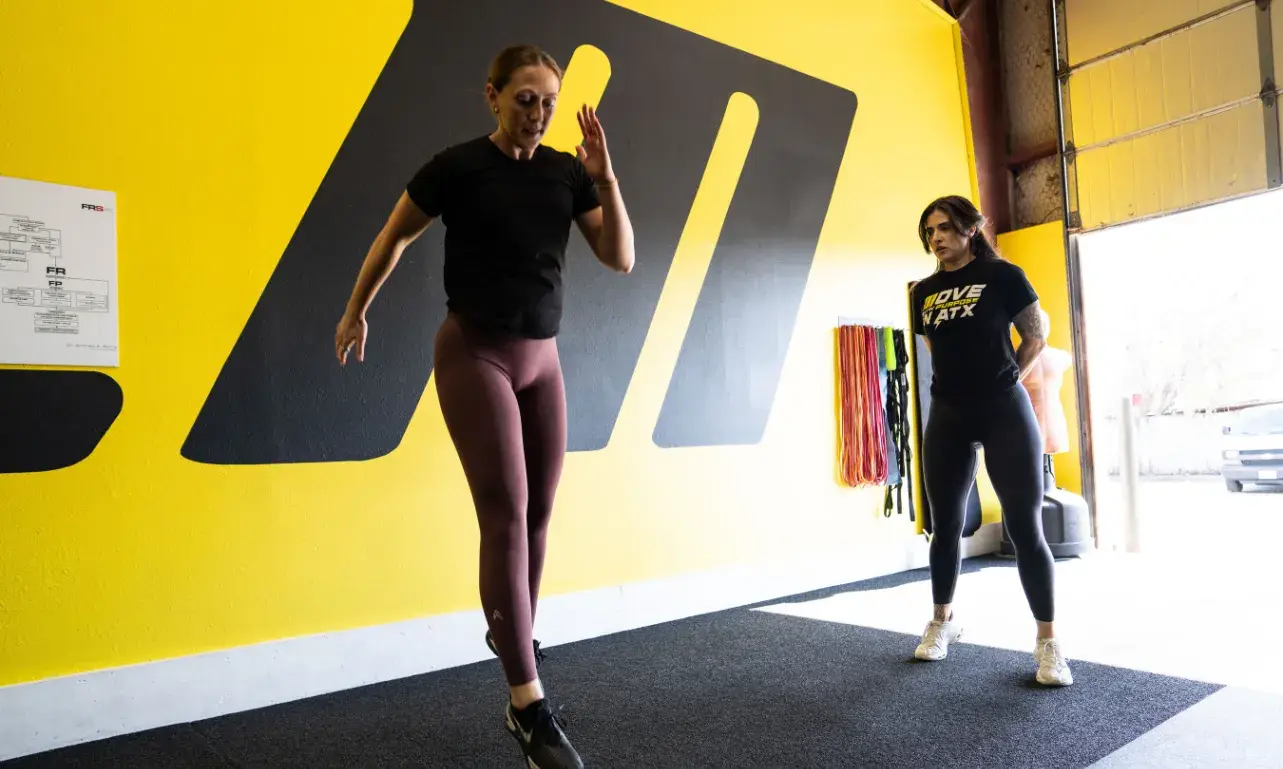
People ask if they should look for a female personal trainer, and it is a fair question. It usually comes up quietly, because there is a worry that wanting one says something about you. It does not. Choosing who coaches your body is a personal decision, and the gender of that person is a reasonable thing to factor in.
What is worth getting straight is where that factor actually matters. A trainer’s gender affects how comfortable you feel and how easily you communicate. It does not tell you if the coaching is any good. Those are two separate questions, and most articles on this topic blur them together into a vague case for one gender over the other. The honest version keeps them apart.
Where a trainer’s gender genuinely matters
The most common reason someone wants a female trainer is comfort, and comfort is not a small thing. It is the difference between a client who shows up and engages and one who quietly disengages a month in.
For a lot of women, especially anyone newer to training or returning after a long break, a gym can feel like a place where they are being watched and judged. Working with a female coach can take some of that edge off. There is less of the dynamic, real or imagined, of a man assessing a woman’s body. That can make it easier to be honest about what hurts, what feels weak, and what you are nervous to try. A client who will actually tell their coach the truth gets a better program, because good personal training is built from real information instead of guesses.
It is worth being specific about what that honesty changes, because it is easy to treat comfort as a soft benefit when it has hard consequences. A client who downplays a sore knee gets a program that loads the knee. A client who does not mention that a movement makes her anxious gets pushed into it before she is ready, and the session quietly becomes something she dreads. A coach can only adjust for what they know. When a client feels safe enough to say the unflattering thing, the program tracks reality, and reality is the only thing worth programming against. This hurts. This scares me. I did not do the homework you gave me. A coach needs to hear all of it. If a particular coach makes that honesty easier for you, the program gets better. That is not soft. That is the mechanism.
There is also the matter of shared physical experience. A female trainer has a body that has been through the same broad categories of change a female client’s body might go through. That does not make her a medical expert on any of it, and it does not mean a male trainer cannot coach a woman well. But when a client wants to talk through how training is fitting around the rest of her life and her body, talking to someone with firsthand reference can make the conversation land easier. The value here is communication, not biology. A coach you can talk to plainly is a coach who can actually help you.
So if you would simply feel more at ease with a woman, that is a legitimate reason to look for one. You do not need to justify it past that.
Where it does not matter at all
Here is the part the typical article skips, because it is less flattering to a clean narrative. A trainer’s gender tells you nothing about the quality of their coaching.
A coach’s ability to assess how your hips and shoulders move, find where you compensate, build a plan that fits your body, and adjust it intelligently over months is not tied to gender. It is tied to education, experience, and how seriously the person takes the craft. At Motive Training, every coach is certified in Functional Range Conditioning, and that standard does not change with who is running your session. A skilled female trainer and a skilled male trainer are doing the same job to the same standard. A weak trainer of either gender will hand you a generic program and call it personalized.
This matters because “find a female trainer” is sometimes treated as if it were the whole decision. It is not. It narrows the field. Inside that field you still have to find someone good, and that is the harder and more important search. A coach you are comfortable with who runs a sloppy process will get you a sloppy result, pleasantly.
It is also worth being clear about what this is not. Choosing a female trainer is not a vote against male trainers, and good training culture is not built by sorting coaches by gender. The goal is more options so people can find a real fit, not fewer of any one kind. Frame it as fit, not as a side to pick.
What actually decides your results
If gender narrows the field, what fills it back in? A few things, and they apply to any trainer you are considering.
Start with process. A good coach does not start with a workout. They start with an honest assessment of how you move, where your range is limited, and where your control breaks down. The program comes from what they find. If a prospective trainer wants to put you straight into a generic routine without looking at your body first, that tells you more than any credential.
Then communication. You want someone who explains why you are doing what you are doing, answers questions without getting defensive, and listens when you say something does not feel right. This is the trait that gets mislabeled as a gender thing. Plenty of women have had a male trainer who talked over them and concluded they need a female trainer. Often what they actually needed was a coach who listens. That coach can be any gender. It is just rarer than it should be, so it gets pinned to the wrong variable.
Then qualifications and experience. Look for real certification, real understanding of anatomy and movement, and experience with people whose situation resembles yours. A returning beginner, an older client, someone training around an old injury. Each of them needs a coach who has done that work before. If you want a fuller breakdown of what to look for, we have written a guide to choosing a trainer in Austin that goes deeper than this piece can.
There is one more thing that separates a good trainer from an adequate one, and it does not show up in a first session. A program is not a document you receive once. It is something a coach revises as your body responds, as restrictions clear, as new ones surface, as life gets busy and your training has to flex around it. The trainers worth keeping are the ones who reassess on a schedule and change the plan when the evidence says to, rather than running the same block for a year because it is easier. You cannot fully test for this upfront. But you can ask a prospective coach how often they reassess and what makes them change a program, and a real answer will sound nothing like a vague one.
And finally, fit. Try a session or two before committing. Notice if you feel comfortable, if you understand what is being asked of you, and if you trust the person’s judgment. That trust is the foundation of everything that follows.
How to make the call
If you would feel more comfortable with a female personal trainer, look for one. That comfort is real, it affects how well you engage, and it does not require defending.
Just do not let gender be the entire filter. Once you have narrowed to female trainers, run the same hard questions you would run on anyone: do they assess before they program, do they explain their reasoning, do they listen, do they have the background to handle your specific body. A trainer who clears those bars and happens to be someone you feel at ease with is the real find.
The question is not man or woman. It is who is going to look at your body honestly, build something that fits it, and coach you well over the long haul. Comfort gets you in the door. Process is what keeps the progress coming. If you are ready to start with a real assessment, reach out and we will match you with the right coach.
Written by

Brian Murray, FRA, FRSC
Founder of Motive Training
Motive Training is a coaching studio in South Austin built around assessment, joint health, and strength you can use. Train with us in the studio, come to a KINSTRETCH class, or work through the progressions in KINSTRETCH Online.