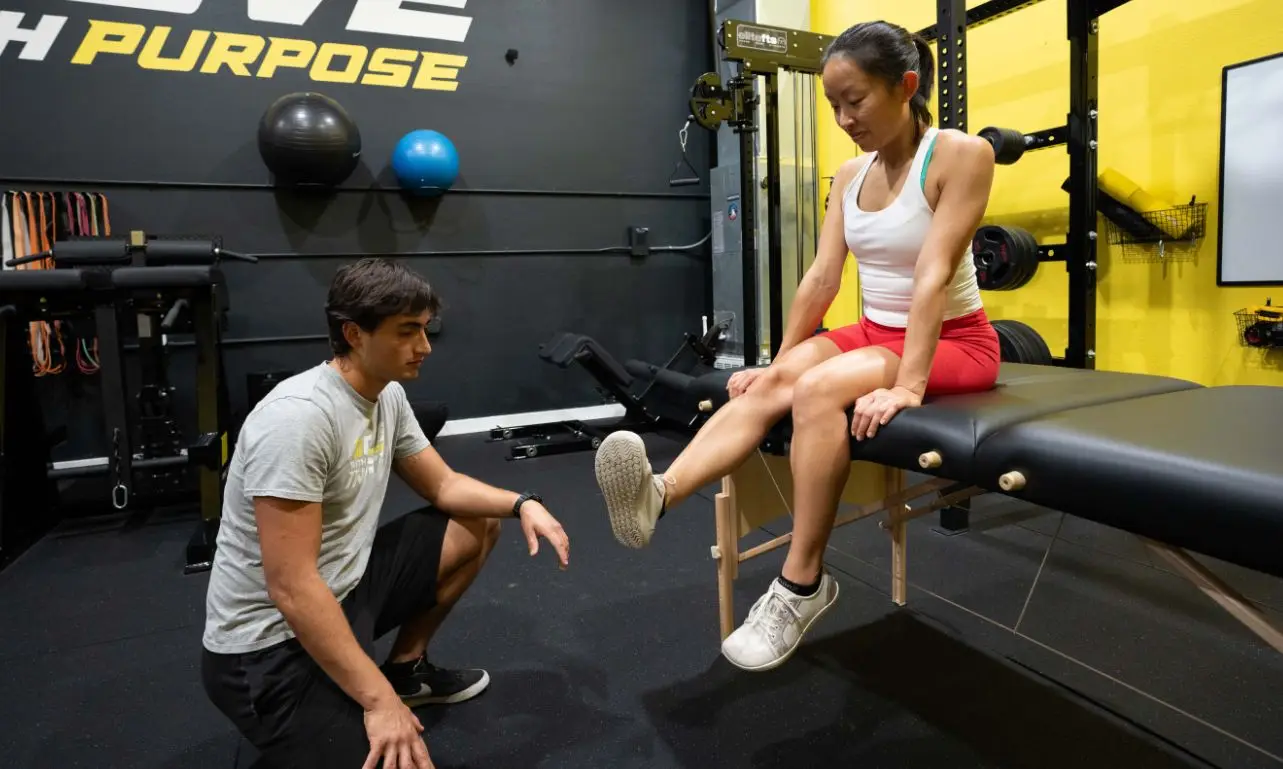
I’ve run enough of these to notice a pattern. Two people come in with roughly the same complaint, sit through the same assessment, hear roughly the same findings, and one of them leaves with a clear sense of what to do next while the other leaves confused. The assessment didn’t change between sessions. What changed was how each person engaged with it.
A Functional Range Assessment is a joint-by-joint evaluation of how your body actually moves, not how you think it moves or how it looks like it should move based on a generic screen. Getting real value out of it depends less on the assessment itself and more on understanding what it’s built to find and what to do with what it finds.
What we’re actually measuring
Most fitness assessments blend several joints into one task. Watch someone squat and you’re seeing hip, knee, ankle, and spine all compensating for each other in real time, which makes it nearly impossible to tell which joint is actually the limiting factor and which ones are just picking up the slack.
The FRA isolates each joint on purpose. We’re not asking “can you squat.” We’re asking specific questions about specific joints: how much rotation is available at the hip in isolation, what happens at end range when nothing else is allowed to move, where the restriction actually lives once you remove every other joint’s ability to compensate for it.
This matters because compensation hides problems. Someone can have genuinely restricted hip internal rotation and still pass a squat screen because their lumbar spine and ankle are quietly doing extra work to make up the difference. That’s not a fixed problem. That’s a problem wearing a disguise, and it usually shows up again later as low back stiffness or knee irritation that seems to come out of nowhere.
The number that actually matters
Every joint we test gets looked at two ways: how far it moves when someone else moves it for you, and how far it moves when you’re the one doing the moving.
Those two numbers are rarely the same, and the gap between them is more useful than either number by itself. Passive range tells you what’s structurally available. Active range tells you what your nervous system currently trusts you to control. When the gap between the two is small, that joint is in decent shape even if the total range isn’t impressive. When the gap is large, you’ve got range sitting there that you can’t actually use, and that unused range is exactly where a lot of injuries happen. Nobody gets hurt in the middle of a comfortable range. It happens at the edges, under load, in a position the body never learned to own.
This is the part a generic mobility screen almost never catches, because most screens only measure one side of that equation. You can stretch a joint into a better passive number for years and never touch the actual problem if the active side never catches up.
Leave the self-diagnosis at the door
People frequently walk in already convinced they know what’s wrong. Tight hip flexors. Weak glutes. A hip that “doesn’t fire.” Sometimes they’re right. Often the language they’re using describes a sensation, not a mechanism, and the actual limitation is somewhere else entirely.
I’d rather someone come in with an accurate description of what they feel than a diagnosis they picked up from a video. “My hip feels stuck when I reach behind me” is useful information. “My psoas is locked up” is a conclusion that may or may not hold once we actually test the joint. The assessment exists specifically to replace guesswork with data, and that only works if you let the data lead instead of showing up to confirm something you already decided.
Ask why we’re testing what we’re testing
The FRA is not a passive experience. If you don’t understand why we’re checking rotation at a specific joint, ask. Understanding the reasoning behind a test changes how useful the result is to you, because you start connecting what we find to how you actually move outside the gym.
This also surfaces things a silent assessment misses. If we ask you to reach into a position and you mention it feels different from one side to the other, or that it reminds you of something that bothered you three years ago, that’s real signal. The assessment is built to catch what your joints can and can’t do. The conversation around it catches context a measurement alone can’t.
What good data actually gets you
The point of all this isn’t a printout. It’s a training decision. Your FRA results tell us where daily joint maintenance work belongs, where end-range strength is missing and needs to be built, and where a more aggressive Functional Range Conditioning approach is warranted because the gap between passive and active range is large enough to be a real liability.
That’s the entire reason the isolation and the active-versus-passive comparison matter. Vague findings produce vague programming. Specific findings produce a specific sequence: which joints need Controlled Articular Rotations for daily upkeep, which ones need progressive loading at end range, and which ones are fine and don’t need attention right now. Training time is finite. The assessment is what keeps us from spending it on the wrong joints.
Discomfort is not the same as danger
Some of the positions we test feel unfamiliar, and a few feel genuinely uncomfortable the first time. That’s expected. We’re often testing ranges you haven’t visited in years, sometimes ranges you’ve been unconsciously avoiding. Unfamiliar is not the same thing as unsafe, and we’re watching closely enough to know the difference in real time.
If something crosses from unfamiliar into actually painful, say so immediately. That’s also useful data. A position that produces sharp or specific pain tells us something different than a position that just feels foreign, and we adjust the plan accordingly.
Between the assessment and the first real session
The assessment is the map. It’s not the training itself. Once we have the data, we build the actual sequence: what gets trained daily, what gets loaded progressively, and what stays untouched for now because it’s not the priority. For most people, that includes short Input Sessions between full training days, so the joints we identified as needing daily attention actually get it, instead of waiting a full week between touches.
If your assessment points toward ongoing mobility work, KINSTRETCH is often where that gets built out further, particularly for joints where the active-to-passive gap is wide enough that it needs sustained, structured attention rather than a few minutes tacked onto the end of a lift session.
The assessment only works if you use it
The FRA isn’t a diagnosis you receive and then move on from. It’s the starting map for training that actually targets what your body needs instead of what a generic template assumes everyone needs. The value comes from what happens after: getting the daily work done, flagging new information as it comes up, and letting the plan adjust as your body changes.
If you haven’t been through one yet and want to find out what your joints are actually doing, book a Functional Range Assessment and we’ll walk you through exactly what we find and why it matters for how you train next.
Written by

Brian Murray, FRA, FRSC
Founder of Motive Training
We’ll teach you how to move with purpose so you can lead a healthy, strong, and pain-free life. Our headquarters are in Austin, TX, but you can work with us online by signing up for KINSTRETCH Online or digging deep into one of our Motive Mobility Blueprints.