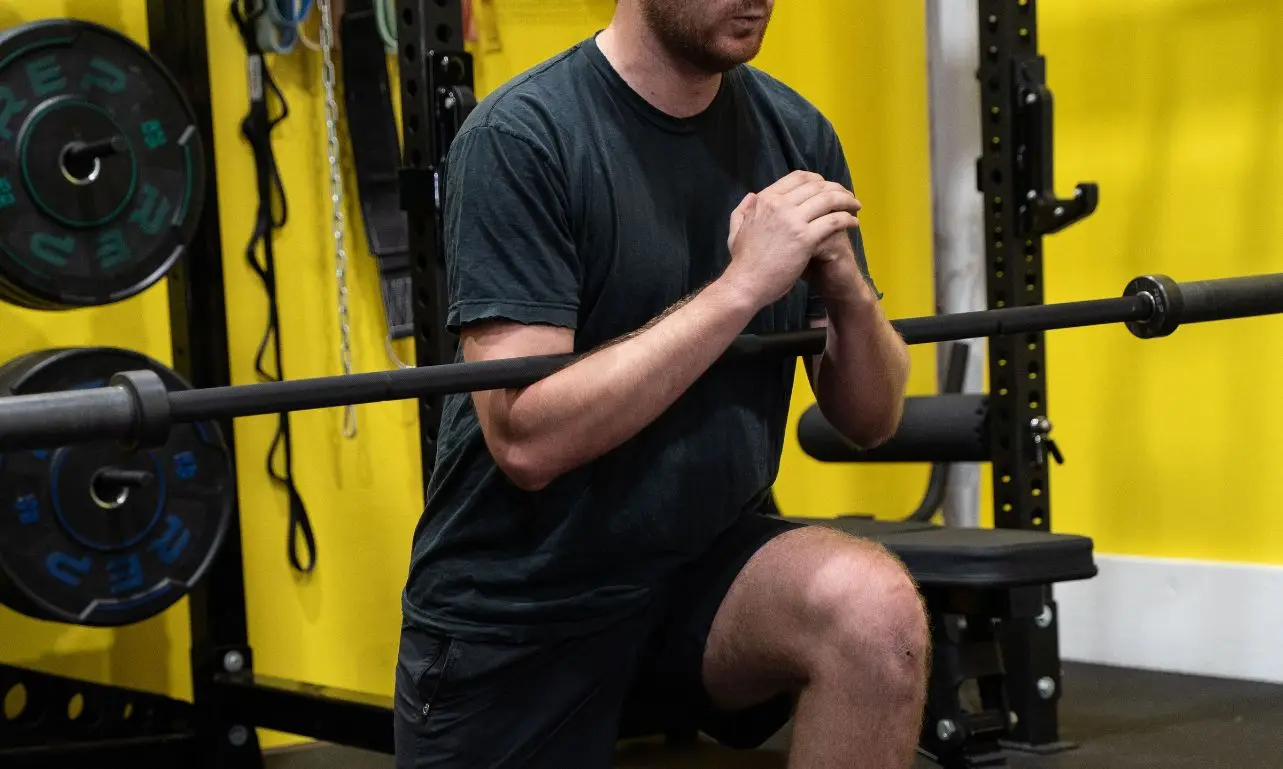
Camp Gladiator started in Austin, and it shows. Most weeks I drive past a group of thirty or forty people working through a four-week outdoor cycle at a park somewhere south of the river, trainer up front, music going, everybody scaling the same circuit to their own level. It’s a good product for what it’s built to do. The question I get asked, usually from someone who’s tried it and stalled out, is if it’s the same thing as personal training with a different price tag attached. It isn’t, and the difference matters more than most comparisons of this kind let on.
What Camp Gladiator is
CG runs on a four-week camp model. Each session is roughly an hour, led by a certified trainer, combining strength work, cardio intervals, agility drills, and core conditioning in a format that changes daily so the body doesn’t fully adapt to any one stimulus. Workouts are built to scale, meaning the same circuit gets modified up or down depending on who shows up that morning. That’s the entire design principle. One trainer, one workout, a room full of people at different starting points, and a scaling system meant to bridge the gap.
It’s a legitimately good option for someone who needs consistency and group energy more than a program built around their specific limitations. The accountability of showing up to a scheduled group session at 5:30am does something that a solo gym membership rarely does for most people. If that’s what’s been missing, CG solves it well.
Where the model runs into a ceiling
The thing a scaled group circuit cannot do is start from an assessment of what you specifically need. A trainer running a class of thirty people can watch form and call out modifications, but they cannot know, session to session, if your hips rotate the way this morning’s lunge pattern assumes they do, or if your shoulder has the overhead range that the day’s press variation is asking for. The workout is fixed. The bodies moving through it are not.
This is where the research on high-intensity functional training gets useful, because the point isn’t that the format is dangerous. A systematic review and meta-analysis pooling 28 studies and over 11,000 participants found an overall injury prevalence of 36 percent and an injury rate of roughly 4.3 per 1,000 training hours across high-intensity functional training programs generally, prospective studies, the more reliable design, showed rates closer to 9.9 per 1,000 hours (1). That’s comparable to other popular training formats, not dramatically worse. The most commonly injured areas were the shoulder, back, and knee (1), which tracks with what you’d expect from a format built around compound, multi-joint movements performed at pace in front of a group.
A smaller Mayo Clinic study of 100 adults in a six-week group strength-endurance program found something worth paying attention to separately from the injury numbers: participants had the advantage of a smaller instructor-to-participant ratio, which the researchers noted allowed for closer monitoring of technique (2). That’s the actual variable that matters here. The variable is how many eyes are on you, how often, and if anyone is tracking your specific restrictions across sessions instead of just calling out cues in the moment.
What one-on-one training is built to do differently
Personal training starts from the opposite direction. Before a workout gets built, the question is what your body can and can’t do right now, and why. That’s the entire premise behind our Motive Movement and Mobility Assessment, which exists precisely because a fixed circuit can’t account for the fact that two people doing the same lunge pattern might be compensating for completely different restrictions. One person’s knee pain during that movement might trace back to a hip that won’t rotate. Someone else’s might trace back to an ankle that won’t dorsiflex. The exercise looks identical. The fix isn’t.
That specificity is also what makes one-on-one training the better fit for anyone carrying a real limitation into the room: a prior injury, a joint that’s been cranky for years, or a body that just doesn’t move the way a generic template assumes. Starting from something specific instead of a clean slate changes what the first few weeks need to look like, and that distinction is worth reading more on in what makes personal training work.
Who fits where
If you’re generally healthy, you thrive on group energy, and consistency has been your real obstacle, Camp Gladiator or something like it is a reasonable answer. It gets people moving who otherwise wouldn’t be, and that’s not a small thing.
If you’ve got a specific restriction, a recurring ache, or a goal that requires more precision than a scaled group circuit can provide, that’s a different problem, and it needs a different tool. That’s the gap assessment-based personal training is built to close. Not a louder version of the same workout. A different starting question.
If you want to know what your own restrictions are before deciding which format fits, schedule with us.
References
- Knapik JJ. Injuries during high-intensity functional training: systematic review and meta-analysis. J Spec Oper Med. 2022;22(1):121-129.
- Batterson AM, Froelich RK, Schleck CD, Laskowski ER. Injury rate and patterns in group strength-endurance training classes. Mayo Clin Proc. 2020;95(3):468-475.
Written by

Brian Murray, FRA, FRSC
Founder of Motive Training
Motive Training is a coaching studio in South Austin built around assessment, joint health, and strength you can use. Train with us in the studio, come to a KINSTRETCH class, or work through the progressions in KINSTRETCH Online.