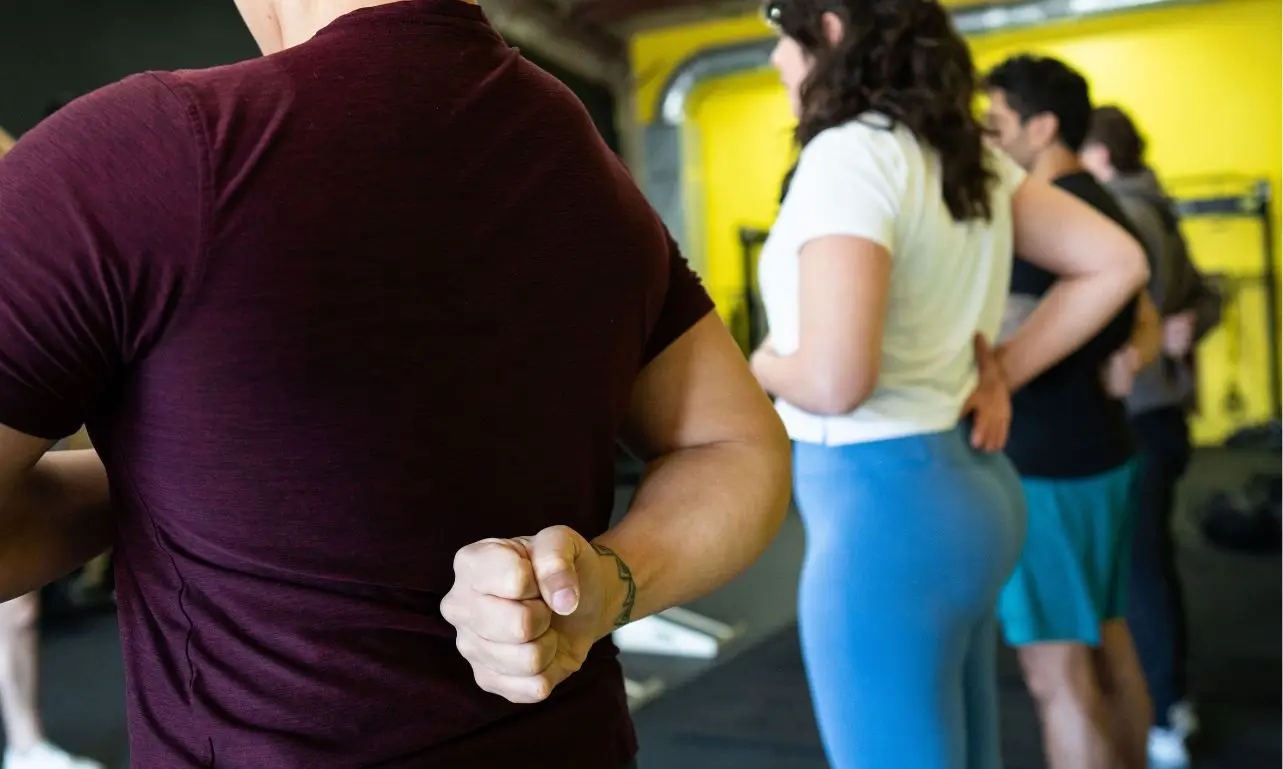
People show up at Motive having already spent months on one slice of The Ready State’s system: a resistance band looped through a rig for joint distraction, a lacrosse ball worked into a hip flexor before squatting. That slice belongs to a much larger program Kelly Starrett and his wife Juliet started building in 2008 under the name MobilityWOD, years before the rebrand. The person who only picked up that one piece is often frustrated anyway, which says less about Starrett’s system as a whole and more about which part of it made it into someone’s routine.
Starrett earned his reputation honestly, and it’s worth being specific about how. He’s a licensed Doctor of Physical Therapy, trained at Samuel Merritt College, not a self-styled guru working off intuition and a following. Becoming a Supple Leopard, his 2013 book, became a New York Times and Wall Street Journal bestseller and gave an entire generation of coaches a systematic language for mobility work that hadn’t existed before it. The book itself argues against relying on passive, end-range static stretching almost as directly as FRC does, making the case that holding a position without intention does little for real athletic capability. His client roster runs through the NFL, the NBA, the NHL, Olympic teams, and the CrossFit Games, the kind of list that doesn’t hold for close to two decades on marketing alone. He’s kept building since: Built to Move, the 2023 book co-written with Juliet, reframes a lot of the same principles around ten daily habits for a much broader audience than elite athletes. FRC, Functional Range Conditioning, lands on a similar definition of mobility: active control through a usable range, close enough to Starrett’s own “flexibility you can use” that the overlap is obvious. Where the two systems diverge is narrower than it first looks.
What The Ready State’s system covers
The Ready State runs well past soft tissue work. Becoming a Supple Leopard walks through movement standards for the major lifts, the squat, bench press, deadlift, clean, and snatch, alongside compression mobilization, applying sustained pressure to a restricted area while moving actively through range underneath it, not lying passively over a foam roller. Lifestyle factors like sitting posture and sleep position get real space in the book too. Lacrosse ball and barbell smashing, banded joint distraction, and voodoo floss compression are genuine parts of the system, but they sit inside a much larger structure built around positional strength and active range, not in place of it.
Where the two systems already agree
Static, passive stretching held without intention doesn’t do much for lasting athletic capability, and neither system disputes that. A 2014 study in the Journal of Applied Physiology (1) put subjects through three weeks of plantar flexor stretch training and measured a 19.9 percent increase in dorsiflexion range along with a 28 percent increase in passive joint moment at end range. Those gains tracked with stretch tolerance and some mechanical elongation in the muscle and fascicle, not with voluntary muscle activation or motoneuron excitability, which stayed flat the entire time. A study from the Journal of Sport Rehabilitation (2) found the same pattern from the neurological side: six weeks of static stretching produced a 42 percent increase in ankle dorsiflexion, with no measurable change anywhere in the Ia-reflex pathway that would explain a real shift in nervous system control. Both bodies of research point toward the same conclusion Starrett makes in his own writing: passive holding opens a range without teaching the nervous system anything about what to do with it.
Where the two systems diverge
The real difference sits in structure, not philosophy. The Ready State’s diagnostic approach is test and retest: try a mobilization, check the range, adjust, repeat, largely self-directed and applied wherever a person feels restricted that day. It’s flexible and useful for exploration, and it’s also the piece some longtime users of the system, including people well inside the CrossFit and mobility community, have pointed to as a real gap: there’s no single, standardized measurement across every joint, so two different sessions can produce two different pictures of the same restriction. FRC’s answer to that specific problem is a formal joint-by-joint assessment, measuring passive range, active control, and the gap between them at every major joint, with numbers that get written down and retested on a schedule instead of judged by feel session to session.
The specific technique differs too. Starrett’s compression mobilization pairs external pressure, a lacrosse ball, a band, a barbell, with active movement through the range underneath it. PAILs and RAILs skip the external tool entirely and use isometric contraction at a joint’s true end range instead, Progressive Angular Isometric Loading followed by Regressive Angular Isometric Loading, proving through force production alone that the range is worth the nervous system’s trust. Both are active. Neither depends on a passive hold to make its case. They’re different tools solving a shared problem from different angles.
Choosing between the two
Someone who wants a comprehensive, self-directed daily practice covering strength standards, tissue work, and lifestyle factors in one system has good reason to build around The Ready State, and that system has earned its following honestly. Someone who wants an individually measured baseline, tracked and retested over time at every major joint, is closer to what a functional range assessment is built to provide. Neither one requires abandoning the other. A lot of the actual work, end-range loading through PAILs and RAILs during a functional range conditioning session, layers naturally on top of compression mobilization done earlier in the day, and scheduling time to find out where that layering helps is a reasonable next step for anyone already running both.
FAQ
Is The Ready State’s system less rigorous than FRC?
Starrett is a licensed physical therapist whose system covers strength standards, tissue work, and lifestyle factors in real depth, and that rigor is a real part of why it has held up for close to two decades. The two systems differ in structure, a self-directed test-and-retest model against a formal, numbered assessment, not in how seriously either one takes the problem.
Can someone use both systems together?
Plenty of people already do this without realizing it. Compression mobilization before a session and formal end-range loading through PAILs and RAILs during a functional range conditioning session solve different parts of the same problem; they aren’t competing for the same job.
Does the stretching research argue against Starrett’s system specifically?
No. His own writing already argues against relying on passive, end-range static holding for lasting change. The research here supports a point his own system already makes, not a critique of it.
References
- Blazevich AJ, Cannavan D, Waugh CM, Miller SC, Thorlund JB, Aagaard P, Kay AD. Range of motion, neuromechanical, and architectural adaptations to plantar flexor stretch training in humans. J Appl Physiol. 2014;117(5):452-462. https://doi.org/10.1152/japplphysiol.00204.2014
- Hayes BT, Harter RA, Widrick JJ, Williams DP, Hoffman MA, Hicks-Little CA. Lack of neuromuscular origins of adaptation after a long-term stretching program. J Sport Rehabil. 2012;21(2):99-106. https://pubmed.ncbi.nlm.nih.gov/22387809/
Written by

Brian Murray, FRA, FRSC
Founder of Motive Training
Motive Training is a coaching studio in South Austin built around assessment, joint health, and strength you can use. Train with us in the studio, come to a KINSTRETCH class, or work through the progressions in KINSTRETCH Online.