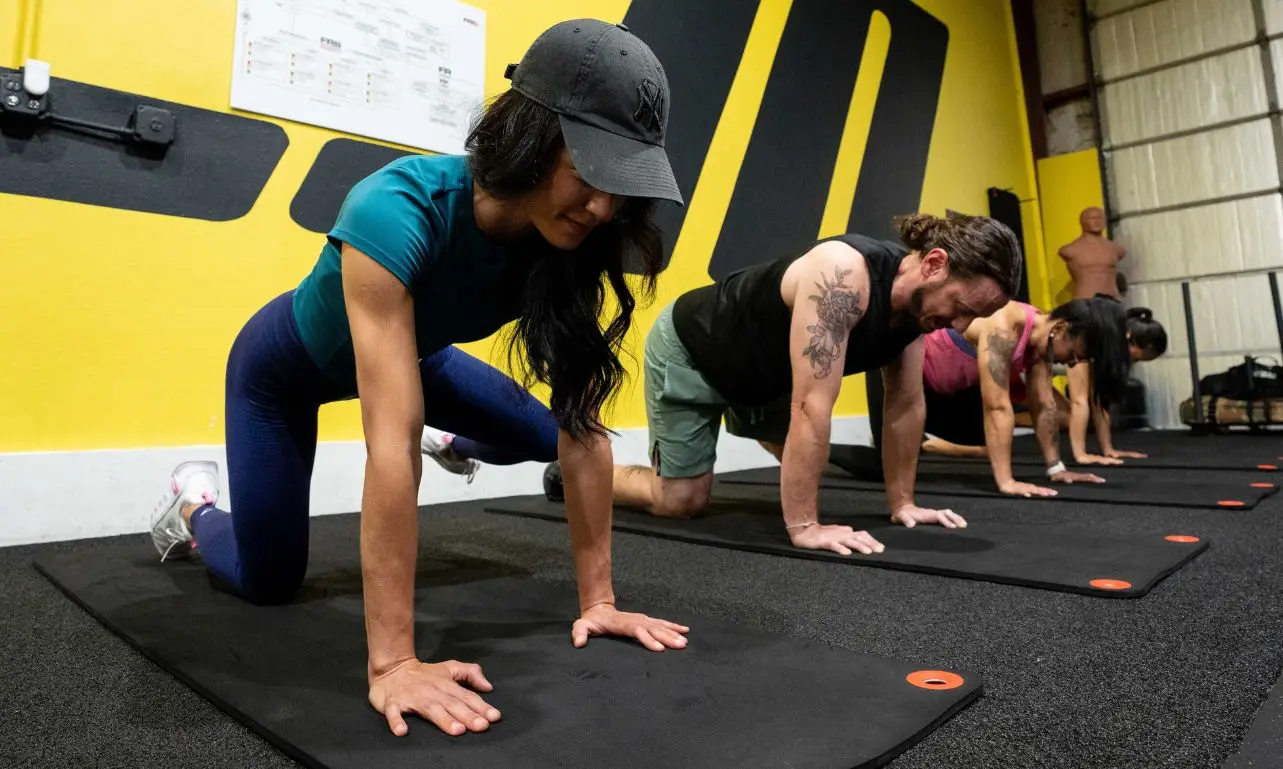
A pattern I see constantly in assessments: someone comes in with hip tightness that has been there for years. They stretch it every day, sometimes twice a day. They’ve done the half-kneeling hip flexor stretch, the couch stretch, the pigeon, all of it. The tightness comes back within hours. Sometimes within minutes of standing up.
The default assumption is that the psoas is short and needs to be lengthened. More stretching. Longer holds. Deeper positions. That logic sounds reasonable until you run an assessment and see that their passive hip extension isn’t actually that restricted. They can get there when you move them through it. They just can’t get there themselves.
That’s a different problem entirely.
What the psoas actually does
The psoas major is the only muscle that directly connects the lumbar spine to the femur. It runs from the transverse processes and vertebral bodies of T12 through L5, crosses the hip joint, and attaches to the lesser trochanter of the femur. Because of that path, it functions as both a hip flexor and a lumbar stabilizer depending on which end is fixed.
This is why psoas issues are rarely just “tight hips.” When the psoas is under chronic load or working overtime to compensate for something else, you feel it in the hip, but you might also feel it in the lower back, the groin, or even the front of the thigh. The muscle spans too much territory to cause a single, clean symptom.
Most people find out they have a psoas problem during sitting or right after standing up. That’s consistent with its anatomy. Prolonged hip flexion keeps the muscle at a shortened length, and when you stand, it has to rapidly work through a range it’s been compressed in for hours. If it lacks the active strength and extensibility to do that efficiently, your nervous system registers the demand and grabs.
Why stretching doesn’t fix it
The stretch tolerance model explains most of what’s happening here. When you hold a hip flexor stretch, you’re temporarily convincing your nervous system to allow more range by habituating it to the sensation. Stretch tolerance goes up. The position feels more accessible. Then you stand up, go about your day, and a few hours later you’re back to where you started.
This is not a failure of stretching. It’s just what stretching does. It changes how comfortable your body is with a position. It doesn’t automatically build the muscular control required to own that position.
Here’s the part that matters: the psoas doesn’t tighten because it’s short. In a lot of cases, it tightens because it’s the most available stabilizer for a hip joint that lacks control through its range. The nervous system is protective. If end-range hip extension feels uncontrolled, something has to take up the slack. The psoas is right there, already attached to the lumbar spine, and it will take that job.
Stretching the psoas without addressing the underlying control deficit is the equivalent of releasing the brakes without fixing the steering. You get temporary freedom in the range. The brake comes back on because the underlying problem hasn’t changed.
The hip extension gap
One of the more useful things you can do to understand your own situation is to check the gap between your passive and active hip extension. Passive hip extension is how far the joint moves when you assist it or when it’s moved for you. Active hip extension is how far you can move it under your own muscular control.
Most people have more passive range than they can actively access. That gap is exactly where the tightness lives.
If you’re missing five to ten degrees of passive hip extension, you probably do have some tissue restriction and mobility work will help. If your passive range is fine but your active range is significantly less, you have a motor control problem, and stretching the passive end of it will not move the needle on the thing that’s actually limiting you.
I’ve run this test enough times to say with reasonable confidence that a majority of people who complain of chronic hip flexor tightness are in the second camp. The passive range is there. The active control isn’t. A Functional Range Assessment makes both numbers visible so you’re not guessing which one is actually the problem.
What to train instead
The goal isn’t to stop stretching the psoas. Getting into end-range hip extension positions is useful. The issue is what you do once you’re there.
A passive stretch hold is a starting point, not a destination. The position needs to be loaded.
PAILs and RAILs applied to a hip extension position do this directly. Once you’re in a half-kneeling position or a lunge with the rear hip in extension, you gradually load the hip flexors on the front side (PAILs) and the hip extensors on the rear side (RAILs) isometrically. You’re building strength at the exact range that your nervous system keeps flagging as unsafe. Over time, the brain stops treating that range as a liability and starts treating it as usable territory.
Controlled articular rotations work alongside this. A hip CAR taken slowly through the full circumference of joint motion exposes what the hip can access actively, and repeated exposure helps build the neurological map for ranges that have gone dormant from disuse. If you’ve been sitting eight hours a day for a decade, parts of your hip’s rotational capacity have effectively been offline. CARs are how you start reconnecting them.
The psoas also responds well to loaded hip flexion work when the range is available and controlled. Exercises that challenge the hip flexors through their full range of motion, rather than just shortening them against resistance, build the kind of capacity that makes the muscle less prone to chronic guarding.
The lumbar connection
One thing worth understanding: if your lower back is also involved, that’s often part of the same picture. The psoas attaches directly to the lumbar vertebrae. When it’s chronically overloaded, it can increase compressive force on the lumbar discs and alter the position of the pelvis and lumbar curve. People with anterior pelvic tilt often have a psoas that’s working harder than it should, not because it’s strong, but because it’s compensating.
This is why back pain that doesn’t have a clear structural explanation sometimes clears up when hip extension control improves. The load gets redistributed when the hip joint can do its job.
If you’ve been managing lower back discomfort alongside hip tightness and nothing has resolved it, that relationship is worth paying attention to. An assessment can map both the hip and lumbar findings together and give you a clearer picture of what’s actually driving what. Most evaluations that look at the hip in isolation miss this.
The practical version
The shorthand: if you stretch your hip flexors every day and the tightness returns within hours, stop assuming you haven’t stretched enough. The stretch isn’t the problem. Stretch tolerance has probably already been addressed. What hasn’t been addressed is end-range strength and active control through hip extension.
Build the range you’re stretching into. Load it. Give the nervous system a reason to trust it. That’s what shifts chronic tightness from something you manage indefinitely to something that actually changes.
If you’re in Austin and want to see where your hip extension gap actually sits, reach out and we’ll figure out the right starting point.
Written by

Brian Murray, FRA, FRSC
Founder of Motive Training
Motive Training is a coaching studio in South Austin built around assessment, joint health, and strength you can use. Train with us in the studio, come to a KINSTRETCH class, or work through the progressions in KINSTRETCH Online.