Most people ask what a personal trainer does and get an answer built around accountability, form, and motivation. All three matter. None of them explain the two decisions that determine if training works at all.
One of our clients came to us with pain across her whole body, years of it, after a string of specialists who had not helped. She trained with us for a few months. It did not resolve. Here is how she describes what happened next.
“He was honest with me when I wasn’t seeing the results I was hoping after a few months and pointed me in another direction. That was when I was diagnosed with my spinal condition.”
She was later diagnosed with a spinal condition training was never going to fix, and she has since finished treatment for it. The useful part of that story is not the diagnosis. It is a trainer willing to say this is not working and point her somewhere else.
That is the first decision underneath all the coaching: deciding if training is the right tool for what is in front of you, and knowing what to do when it is not.
What gets measured before anything gets programmed
The second decision happens earlier, and most clients never see it.
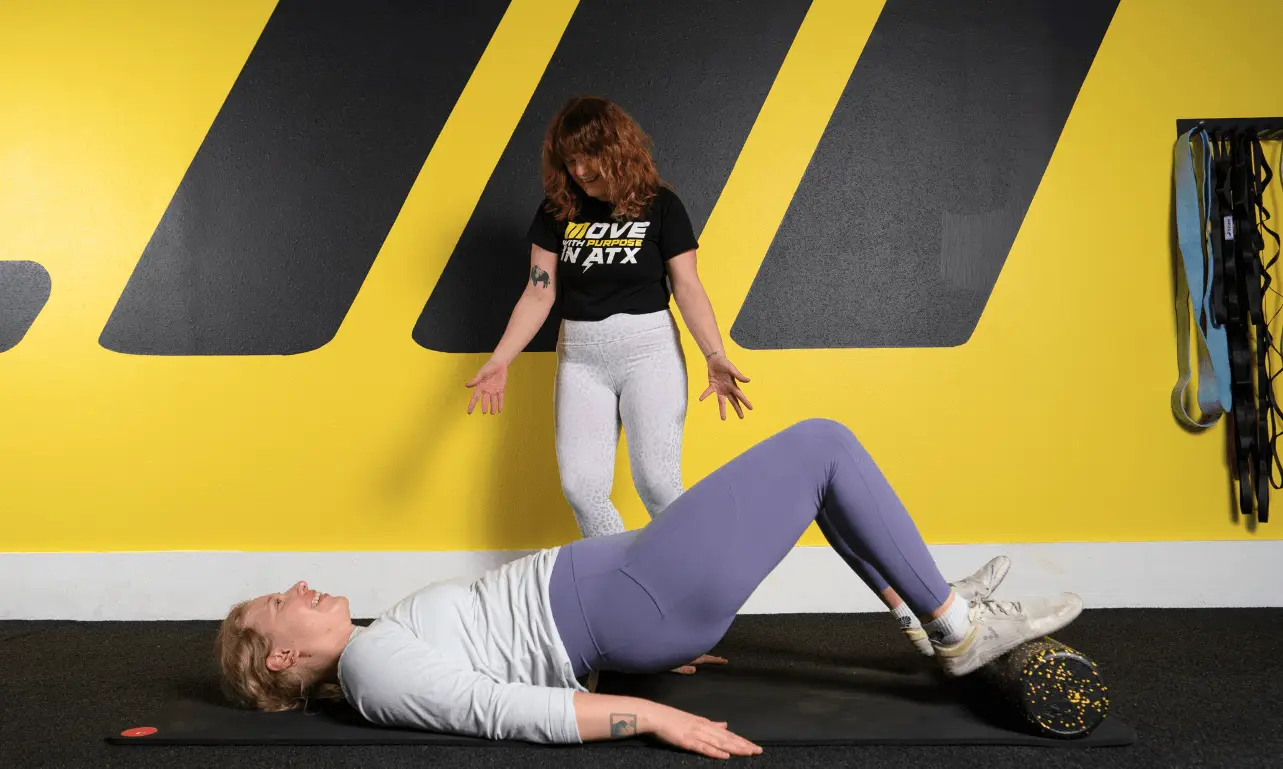
Before we write a single set for someone new, we run a Motive Movement and Mobility Assessment. Another client, who came in with left shoulder pain bad enough to interrupt her sleep, described the difference this way.
“Rather than just looking at the single spot that was hurting, they took my entire injury history into account and measured every single joint, comparing passive availability against active control.”
Passive availability is the range someone else can move you through. Active control is the range you can produce and hold on your own. Most people have never had that gap measured, which means most programs get built on a guess about it instead. A shoulder with plenty of passive range and almost no active control needs the opposite of what a restricted shoulder needs, and mixing up which one you have is a common way a well-intentioned plan stalls for months.
That measurement decides what gets built first and how hard it gets pushed.
Coaching that knows where it stops
Training and clinical care overlap more than most people expect. It is easy to either baby every ache indefinitely or assume a program alone will fix it, and neither instinct holds up without checking the joint itself.
The line between training and physical therapy is not always obvious from inside a session, and part of the job is staying on the right side of it anyway. Referring someone out is not a failure, and a trainer who has spent years in this work without ever doing it has probably not been looking closely enough.
What shows up
The changes clients notice tend to be specific rather than dramatic. A squat that used to feel unstable at the bottom starts feeling like a position you own. A shoulder that needed ten minutes of warming up starts needing two. Soreness stops lingering and starts fading on something closer to a schedule.
It comes from training built on what your joints can do, adjusted as that changes, with someone paying attention closely enough to notice when it stops changing and something else needs to happen instead. The five operating principles behind how we run sessions are built around that same idea, and worth reading if you want the fuller version.
That is what you are paying for with a coach: someone making both of those decisions correctly, for as long as it takes.
If you want to find out what that looks like for your own joints, an assessment is where it starts.
Written by

Brian Murray, FRA, FRSC
Founder of Motive Training
Motive Training is a coaching studio in South Austin built around assessment, joint health, and strength you can use. Train with us in the studio, come to a KINSTRETCH class, or work through the progressions in KINSTRETCH Online.