People ask how often they should do mobility work the same way they’d ask how often to take a supplement, like there’s a number. Three times a week. Every day. Ten minutes. And I get why, because almost everything in fitness gets sold with a dose attached. But the question has a hidden flaw in it, which is that “mobility work” isn’t one thing. A morning joint routine and a hard end-range strengthening session are both mobility work, and they belong on completely different schedules. Lumping them together is how people end up either doing too little of the work that matters or too much of the work that fatigues them, sometimes both at once.
So the useful version of the answer starts by splitting mobility into what it actually is. Once you separate the maintenance from the building, the frequency sorts itself out.
Daily maintenance is a different job than building range
There’s a category of mobility work that’s meant to be done often, lightly, and forever. Controlled articular rotations are the clearest example. Taking each joint through its full active range, slowly, under your own control, is low-demand enough that doing it daily is the point, not the overdose. A morning CARs routine isn’t trying to make you more mobile so much as keep the range you have, circulate the joint, and give you a daily read on how each joint is moving before the day loads it up.
That last part matters more than people realize. When you move every joint through its range each morning, you build a baseline, and a joint that suddenly feels different stands out against it. The daily-ness is what makes it an early-warning system. We’ve made the case for the morning routine on its own, but the frequency logic is simple: maintenance work is light by design, so it can be frequent, and frequency is most of where its value comes from.
This is the work that should be near-daily for almost everyone. It asks little, it compounds, and skipping it doesn’t fatigue you, it just lets the baseline drift.
Building new range is harder and needs more space
The other category is the work that actually expands what you’ve got, and it runs on the opposite logic. End-range strengthening, the PAILs and RAILs and loaded mobility that build new usable range, is demanding. The contractions are near-maximal, they fatigue the tissue, and they’re hard to do well when you’re tired. That changes the math completely. You can’t and shouldn’t do this every day for the same joint, any more than you’d max out a deadlift daily.
Two to three exposures per joint per week is the working range for this kind of work, with recovery in between, because you’re asking for a real adaptation and adaptation needs the gap between bouts. We’ve covered the full programming logic for how to dose it, but the frequency headline is that harder mobility work needs more rest, not less, and the instinct to grind it daily produces worse results than spacing it out. A joint hammered every day with near-max isometrics adapts slower than one trained hard twice a week and left alone to recover.
So the two categories invert each other. Maintenance is light and frequent. Building is hard and spaced. Most people’s confusion comes from applying one schedule to the other, either treating gentle daily CARs like they’re optional cross-training or treating brutal end-range work like it’s a daily habit.
What this looks like in a real week
Put together, a realistic week for someone serious about mobility isn’t a single block repeated. It’s a daily light layer with harder work folded in a few times.
The light layer is the CARs routine, most mornings, ten or fifteen minutes, treated as maintenance and assessment rather than training. The harder layer is two or three sessions a week where you actually work to expand specific ranges, placed on days when you have the output to do them well, which usually means early in a training session rather than tacked onto the end of an exhausting workout. You don’t need to hit every joint in those harder sessions. You target the ones that need it, which is where knowing your own gaps matters more than any frequency rule.
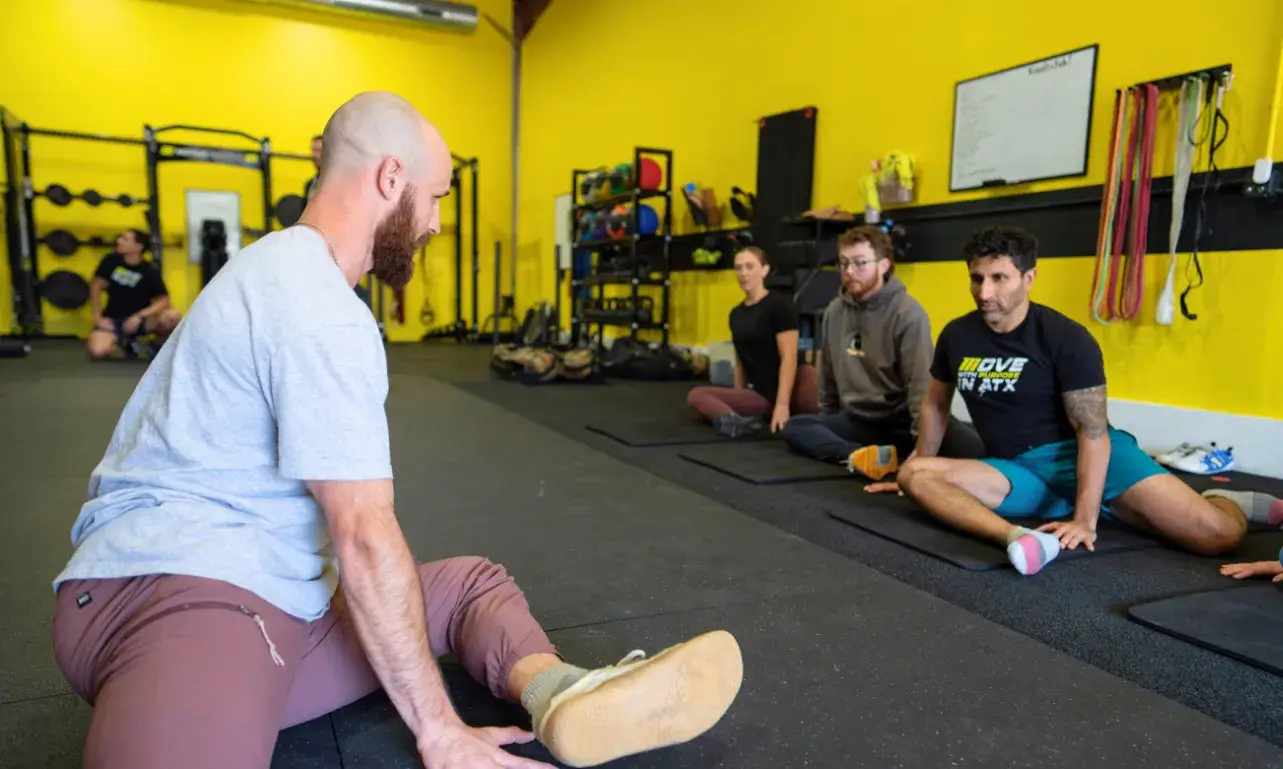
If you take a KINSTRETCH class, that’s typically your harder building work for those joints that week, and you’d treat it accordingly, not stacking another brutal end-range session on the same areas the next day. The class is the dose. The daily CARs around it are the maintenance.
Why more isn’t better past a point
The belief that mobility is the one thing you can’t overdo is wrong, and it’s worth saying plainly because it leads people astray. The light maintenance work, yes, do it daily, it’s built for that. But the hard work follows the same rules as any other training stress. Past a certain frequency you’re not adding stimulus, you’re accumulating fatigue, and fatigue degrades the contraction quality that drives the whole adaptation. More sessions with worse output is a worse program than fewer sessions done well.
This is also where consistency beats intensity over time. The person who does ten honest minutes of CARs most mornings and two focused end-range sessions a week, every week, for a year, will pass the person who does an hour-long mobility marathon when motivation strikes and nothing in between. Mobility is a slow adaptation. It rewards showing up at a sustainable frequency far more than it rewards heroic single sessions. From what I’ve seen, the people who actually change are almost never the ones doing the most. They’re the ones doing the right amount, often enough, for long enough.
The honest frequency answer, then, isn’t a number. It’s a structure: maintain daily, build a few times a week, and let the harder work breathe. If you’re not sure which of your joints need the building work versus just the maintenance, that’s what the movement assessment is for, and it’s the difference between training a sustainable mobility week and guessing at one.
Written by

Brian Murray, FRA, FRSC
Founder of Motive Training
Motive Training is a coaching studio in South Austin built around assessment, joint health, and strength you can use. Train with us in the studio, come to a KINSTRETCH class, or work through the progressions in KINSTRETCH Online.