The current research on manual therapy is not flattering, if you stop reading at the headlines. The Cochrane review on low back pain found that manual therapy as a standalone treatment was not superior to any other first-line option. The Cochrane review on neck pain found it was not superior to exercise therapy or oral medication. A pile of meta-analyses since have found small effect sizes when manual therapy is studied in isolation, with most of those effects showing up short-term and fading at follow-up.
If that was the whole picture, the answer would be simple. Skip the table, go straight to the gym, and accept that hands-on care is somewhere between placebo and a coping mechanism.
It is not the whole picture, but the people who oversell manual therapy and the people who dismiss it tend to be arguing past each other. The studies showing weak isolated effects are not measuring manual therapy as it is actually used in good clinical practice. The marketing that sells manual therapy as a fix for chronic problems is not honest about what a single session can and cannot do. The honest read sits between the two, and it is more useful than either extreme.
What manual therapy is, broadly
Manual therapy is a category, not a technique. It includes soft tissue work (what most people picture as massage), joint mobilization, joint manipulation, myofascial release, instrument-assisted soft tissue mobilization, muscle energy techniques, and a number of other approaches that get applied through the practitioner’s hands. The credentialing varies. Physical therapists, chiropractors, osteopaths, licensed massage therapists, athletic trainers, and certain certified manual therapy specialists can all be doing some version of this work, often with very different training and very different scopes.
Inside that category, what gets called manual therapy in one study might be a soft tissue technique, a high-velocity joint manipulation, or a gentle mobilization. Lumping all of it together and asking “does manual therapy work” is roughly as useful as asking “does exercise work.” The answer depends on which kind, for what, applied how, in combination with what else.
What the evidence actually says
When manual therapy is studied as a complete intervention for chronic pain or dysfunction with no other care alongside it, the effects are real but modest. The literature on patellofemoral pain, lateral epicondylitis (tennis elbow), tension headaches, certain shoulder conditions, and several others shows symptom improvement from manual therapy that beats sham or no treatment. The effect sizes are not large. The effects are mostly short-term.
When manual therapy is added to exercise and education, the picture changes. Several reviews have found better outcomes for combined approaches than for either piece alone, particularly for shoulder pain, low back pain in subgroups that respond to mobilization, and various tendinopathies. The catch is that newer Cochrane reviews struggle with this because they often exclude trials that combine manual therapy with exercise, which is exactly how it tends to be used in actual practice. That methodological choice is debated in the field for good reason. Studying manual therapy as if it lived in a vacuum measures something that does not exist in most clinics.
The piece the research is clearest about is this. Manual therapy is most useful as a symptom modifier that creates a window in which active work can be done more easily. The clinician palpates, treats, mobilizes, applies soft tissue work. The patient leaves with reduced pain and improved short-term mobility. The actual durable change is what gets done in that window. If the window is used for real loading and conditioning, the change can hold. If the window is just a comfortable hour that the client returns to next week, the gains are fleeting and the client gets sold dependence instead of progress.
The active versus passive question
The most common criticism of manual therapy in the current rehab literature is that it is a passive intervention. Something done to the client, not by the client. The framing pushes clinicians toward active care first, manual therapy second, with the worry that manual therapy fosters dependence and shifts ownership away from the patient.
There is something to that argument and there is something missing from it. The piece that is true is this. If your only intervention is hands-on, if the client never works through the new range under their own control, if every session ends with them feeling better and the next session starts with them feeling the same way they always feel, then yes, the work is passive in the sense that matters. It has not produced change the body can keep.
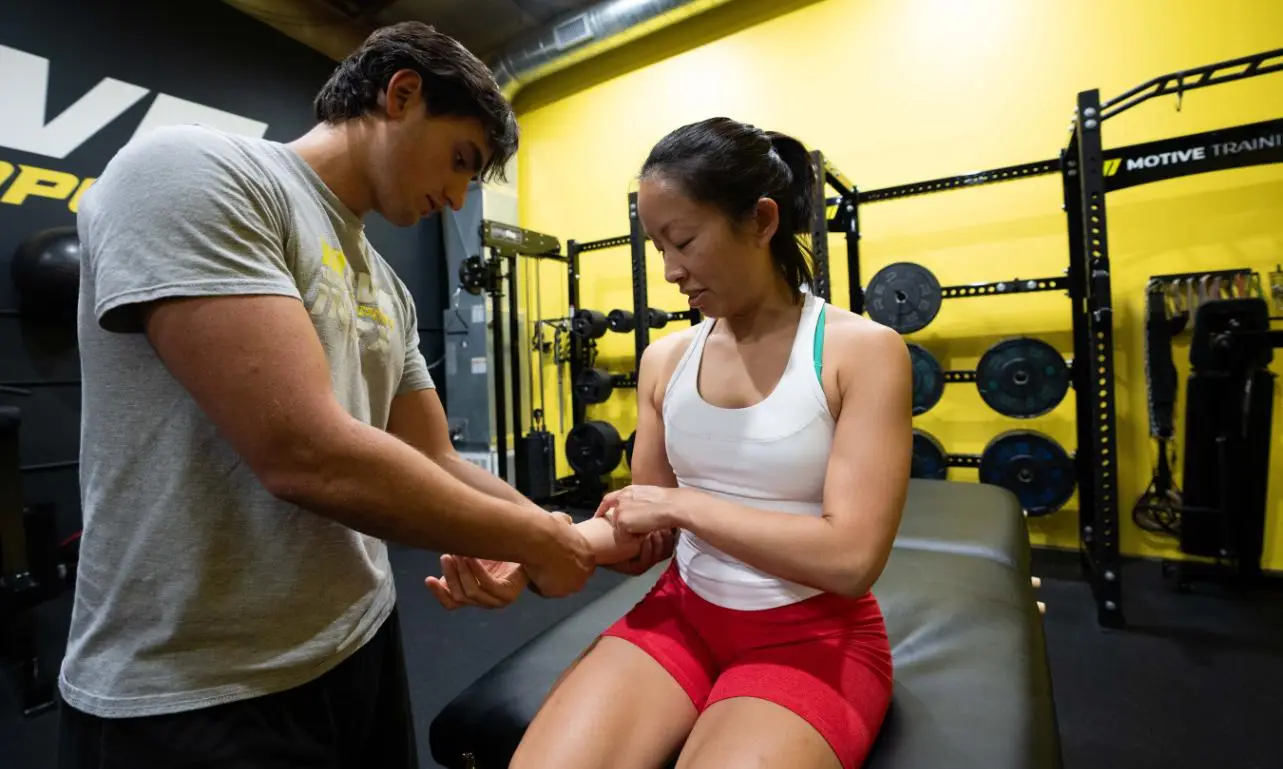
The piece that is missing from the strict active-versus-passive framing is that good manual therapy is rarely just hands-on. The therapist palpates, treats, and then asks the client to move into the new range, to load it, to test it, to use it. The hands-on portion is intended to create an opening. The active portion is what claims it. Calling that whole sequence passive is a category error. It is closer to what coaching looks like than what most people imagine when they hear the word massage.
The deeper question is what the work integrates with after the client leaves the table. A great manual therapy session followed by zero training is a hot shower for a chronic problem. A great manual therapy session followed by a body that knows how to load the new range and is being taken through that loading on a regular basis is something else entirely.
Where it goes wrong
The failure modes I see most often when clients arrive after years of bodywork:
The work has been treated as the fix. Someone gets adjusted, gets worked on, expects that to be the whole job. The body returns to its same patterns the next day because the patterns were never coached out of it. The tissue keeps reacting the same way because the underlying organization keeps producing the same load through the same places. Three years of monthly sessions later, the same restriction is still there.
The provider has oversold what they can know. The “I felt a knot” story trades clinical honesty for narrative confidence. A skilled set of hands can feel tissue tension, layer slide, areas of restriction, and changes in tone. They cannot palpate a single fiber of disorganized collagen and identify it as scar tissue. Claims of that resolution are not supported by what the human nervous system can actually distinguish through touch.
The session has no follow-through. The work ends when the hour ends. There is no programmed loading of the new range, no exercise to consolidate the change, no conversation about how the rest of the chain is organizing this restriction. The gain disappears within days because nothing taught the body to hold it.
The wrong tool gets applied to the wrong problem. Persistent pain with no clear mechanical driver, central sensitization, fear-avoidance patterns, and conditions that are primarily neurological rather than tissue-level do not respond well to tissue work, regardless of how skilled the practitioner is. Manual therapy applied to those situations as if it were the answer can actually slow recovery.
What to look for if you are seeking manual therapy
The honest questions to ask a manual therapy provider, in roughly the order they matter:
What is their credential, and what is their scope. A licensed massage therapist, a physical therapist with manual therapy training, and a chiropractor with extra coursework are doing different jobs under different regulations. Some of them can offer the integration with active care that the work actually needs. Some of them cannot.
How they explain what they are doing. The provider who tells you they will “release your knots and break up your scar tissue” is using marketing language that does not survive scrutiny. The provider who tells you they will assess tissue tension, identify areas of restriction, work them within their scope, and follow that work with active range and loading is describing what manual therapy actually does.
What happens between sessions. If the answer is “come back next week,” and there is no homework, no programmed conditioning, no integration with anything else, the model is dependence. If the answer involves what you are doing to load and use the change in the days that follow, the model is integration.
What they ask about beyond the area that hurts. A practitioner who works only on the local site of complaint without ever asking about the rest of the picture is treating a symptom in isolation. That can be the right call for an acute issue. For a persistent one, it is rarely enough.
How this fits at Motive
Motive started as a training studio with FRC and KINSTRETCH at the center. The manual therapy piece sits inside the same system, as an integrated component rather than a standalone service. The manual work is intended to create the window. The training work claims it. The same model of tissue, joint, and nervous system runs through both.
For clients who have been getting tissue work elsewhere and not seeing it transfer, the integration is the missing piece. For clients who have been doing the training work and have run into a soft tissue ceiling that conditioning alone keeps brushing against, the manual therapy piece is what is missing. For clients who are still trying to figure out what is actually going on and what they need first, the honest answer is usually assessment and conditioning, with manual therapy as a tool that earns its place when the indication is there.
There is no methodology that is the answer. Manual therapy is not. Conditioning is not. Yoga is not. PRI, McGill, the Ready State, none of them are. The error is rarely the methodology itself; it is in how exclusively it gets sold. The body needs assessment, conditioning, soft tissue work when warranted, and a coach or clinician who is honest about which piece is doing what.
If you have been spinning on bodywork for years and the problem keeps coming back, the work was never doing what it was sold as doing. That is not necessarily the practitioner’s fault. It is a failure of the model around the work. The model at Motive is built differently because the conditioning side has always been honest about what it cannot do alone. The manual therapy side carries the same honesty about what it cannot do without the rest. Start with assessment, and we will tell you which piece you actually need.
Written by

Brian Murray, FRA, FRSC
Founder of Motive Training
Motive Training is a coaching studio in South Austin built around assessment, joint health, and strength you can use. Train with us in the studio, come to a KINSTRETCH class, or work through the progressions in KINSTRETCH Online.