The Austin Marathon runs on Sunday, February 14, 2027. If you’re registered, your plan has either started or is about to, and the stretch that matters most for your joints sits at the far end of it. Long runs peak somewhere in the last six weeks. That’s when the hip that felt a little stiff all fall starts announcing itself at mile 18, and when a lot of runners go looking for something new to fix it.
This piece covers that window, from the peak of the build through race week. If you want the broader case for what mobility work belongs in a normal running week, start with our piece on mobility for runners. This one is narrower on purpose.
What peak weeks take out of your hips and ankles
Running asks each joint to move through a small slice of what it can do, and it asks for that slice tens of thousands of times a week. The body adapts well to what it does often. So as mileage climbs, the range you run in gets well rehearsed and the range you never visit gets quieter.
The hip is where this shows up first. Every stride needs some hip extension to push you forward, and the amount most distance runners use is modest. Twenty miles of modest extension doesn’t build more of it. Add a desk job, which describes a lot of Austin runners, and the front of the hip spends the rest of the day in the opposite position. By the time mileage peaks, a lot of runners have less usable extension than they started the build with, and the stride shortens to work around it. The lower back and the outside of the knee tend to pick up the slack, which is part of why IT band complaints cluster late in a training block.
Rotation goes the same way. The hip barely rotates during a stride on flat pavement, so internal and external rotation drift out of practice. You won’t notice until a cambered road or a tight turn asks for some.
The ankle is the other one to watch. Dorsiflexion (shin moving forward over the foot) gets loaded every time you land, and it holds up fine when you’re fresh. The trouble starts with fatigue. Late in a long run, a stiff ankle tends to hand load up the chain or let the foot collapse to find range, and the lower leg pays for it. We covered the shin side of this in our shin splints piece, including why a single long run that jumps past your recent longest seems to matter more than the weekly mileage rule most people follow.
That’s high-volume training in a narrow range doing what it’s supposed to do, and the range outside that slice needs its own attention while the mileage is high.
Austin’s course asks for more than flat long runs prepare you for
The Austin course is hilly, and the hills come in sections that show up at different points in the race. The route also shifts from year to year, so check the official course map for 2027 before you plan your long runs around it.
Hills change what the joints do. Climbing asks for more ankle dorsiflexion and more hip extension than flat ground, because you’re pushing the body up and forward over a foot that’s planted higher than the last one. Descending flips the job. The quads work eccentrically to brake you on every step down, and the knee and hip absorb more force than they would on flat road at the same pace.
If most of your long runs happen on the Lady Bird Lake trail, which is mostly flat, race day will be the first time your legs absorb that much downhill braking deep into a run. Get some rolling terrain into the long runs during the build. The mobility work below helps you own the range the hills ask for; running hills during the build is still what prepares you to race on them.
The taper: what to keep, and what to leave alone
The best-supported version of a taper is roughly two weeks long, with training volume cut by about 41 to 60 percent while intensity and frequency stay where they were (1). That last part gets ignored. Runners cut the mileage, then fill the extra time with whatever they read about that week: a new stretching routine, a new strength move, a long session on a foam roller, or deep positions they haven’t trained in months.
Apply the same logic to joint work that the research applies to running. Keep the frequency of what you’ve been doing, so daily CARs stay daily and two short sessions a week stay two. Bring the intensity of anything new down to zero. The taper exists so you can show up to the start line recovered, and a new loaded position introduces soreness and irritation you don’t have time to adapt to.
From what I’ve seen, plenty of runners feel heavy or restless during a taper. That’s common enough to expect. It’s a poor reason to start pushing range in a way you haven’t been. If something hurts in a way that’s new, that’s a different conversation, and it’s worth having with someone who can look at it well before race week.
What race week should look like
Race week joint work should be short and familiar, and done before you leave the house.
Daily CARs are the backbone. Slow, controlled rotations of the hips, ankles, spine, and shoulders take ten minutes and tell you how each joint feels that morning without asking much of it. If you’re new to them, the CARs guide walks through how to do them well. If they aren’t already part of your routine by January, save them for after the race.
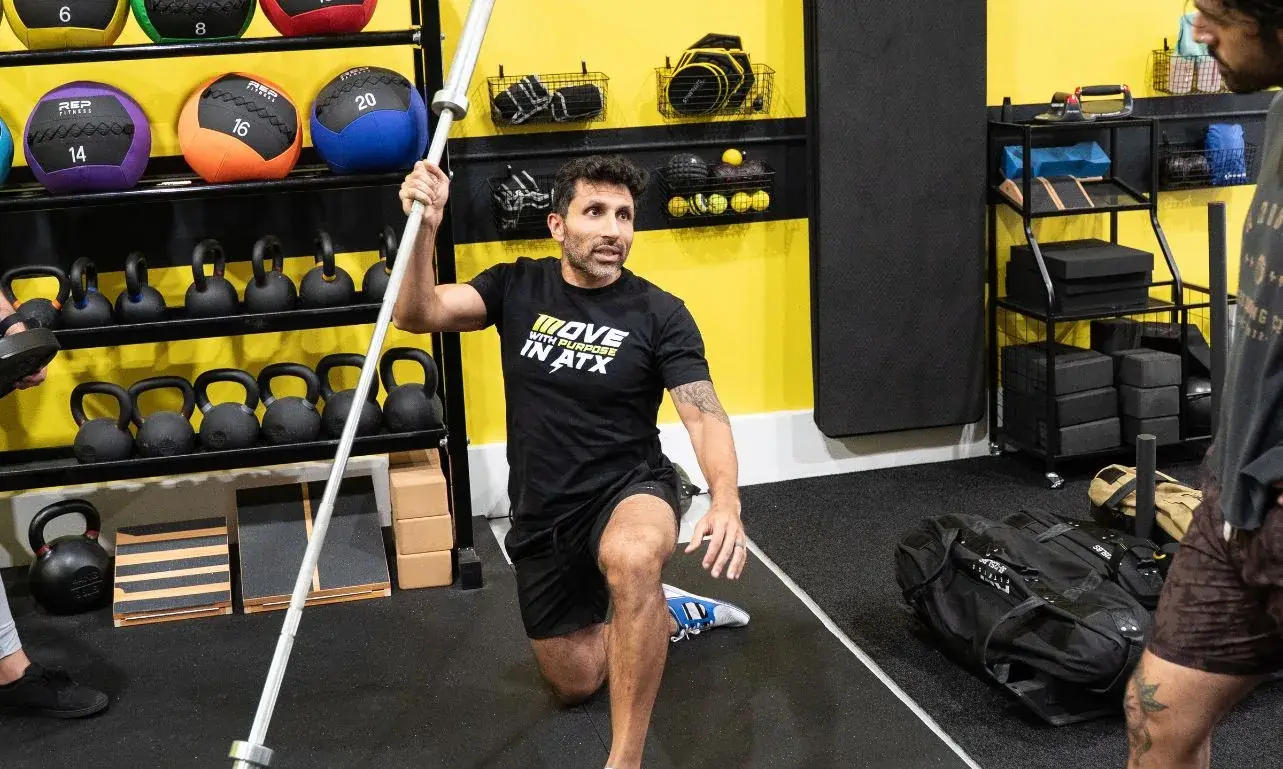
Half-kneeling hip work belongs early in the week and should stay light. A few minutes in a supported half-kneeling position, with the glute of the back leg working and the ribs stacked over the pelvis, keeps hip extension available without loading it hard. This modified couch stretch is a good version for runners because it’s easy to scale down when the legs are tired. Thursday or Friday, cut it back to a single easy set or drop it.
On race morning, keep any static holds short. The research on stretching before performance points to a dose effect. Holds under about 45 seconds show little to no measurable drop in muscle performance, and the likelihood of a meaningful decrease climbs once holds reach 60 seconds and beyond (2). A couple of short holds in positions you already know are fine if they help you feel ready. Long, deep stretching on race morning risks some of the force you spent four months building.
The week after
The first few days after a marathon belong to walking and sleep, plus the same short CARs you used race week. Hold off on loaded range work for about a week, until the general soreness clears and you can tell the difference between tired legs and an irritated joint. That distinction matters more than any particular drill, and rethinking what a cooldown is for helps frame the first runs back.
Then pay attention to what the build exposed. Most runners finish a marathon block with one hip or one ankle that clearly moves worse than the other, and the weeks after the race are the cheapest time to address it. If something has nagged you since fall, have it looked at before you sign up for the next one.
References
- Bosquet L, Montpetit J, Arvisais D, Mujika I. Effects of tapering on performance: a meta-analysis. Med Sci Sports Exerc. 2007;39(8):1358-1365.
- Kay AD, Blazevich AJ. Effect of acute static stretch on maximal muscle performance: a systematic review. Med Sci Sports Exerc. 2012;44(1):154-164.
Written by

Brian Murray, FRA, FRSC
Founder of Motive Training
Motive Training is a coaching studio in South Austin built around assessment, joint health, and strength you can use. Train with us in the studio, come to a KINSTRETCH class, or work through the progressions in KINSTRETCH Online.