There are two basic questions an assessment can answer about a body. The first is how the body moves in patterns. Does the squat look right. Does the overhead reach look right. Does the single-leg balance look right. Does the gait look right. The second is what each individual joint can actually do on its own, separately from how the rest of the body compensates for it. Does this hip rotate. Does this shoulder externally rotate to where it should. Does this ankle have the dorsiflexion that walking and running require.
Most personal training assessment answers the first question. The Functional Movement Screen, the Y-balance test, the overhead squat assessment, the single-leg squat, the in-line lunge, all of them are looking at patterns. The Functional Range Assessment answers the second question. So do certain orthopedic exams. They are looking at joints.
Both kinds of assessment have value. They are not interchangeable. Treating one as the other is one of the more common mistakes in the field, and it shows up in how clients get programmed, how recovery from injury gets handled, and what gets coached versus what gets ignored.
This piece is about the difference, why it matters, and how to figure out which one you actually need.
What a movement screen actually measures
A movement screen looks at how the whole body executes a task. The classic example is the overhead squat assessment. You watch a person squat with their arms overhead and you look for compensations. Knees collapse in. Heels lift. Arms drift forward. Trunk leans. Each compensation gets noted, and from that pattern, the assessor draws conclusions about which areas might be limited and which might be overactive.
That kind of assessment has real value. It tells you what the body does when it tries to do something. It surfaces if the system, as a whole, can coordinate the task. It identifies the obvious cases of patterns that are going to lead to load showing up in the wrong places.
What it does not tell you, and what most movement screen interpreters guess at, is which joint is actually limited. If the heels lift during a squat, the common interpretation is that the ankle lacks dorsiflexion. That might be true. It might also be true that the hip lacks flexion, the trunk lacks the ability to stay upright, the knee tracks poorly because of a different upstream issue, or the person has plenty of ankle dorsiflexion but is not accessing it because of how they have learned to organize the squat. The screen identifies the symptom (heels lifting). It cannot reliably name the cause.
This is the structural limit of pattern-based assessment. It is correlation rich and causation poor. You can read patterns all day and you still do not know, joint by joint, what is restricted and what is not. You are guessing, refining your guess based on experience, and hoping you are right. Often you are. Sometimes you are not.
What a joint-level assessment actually measures
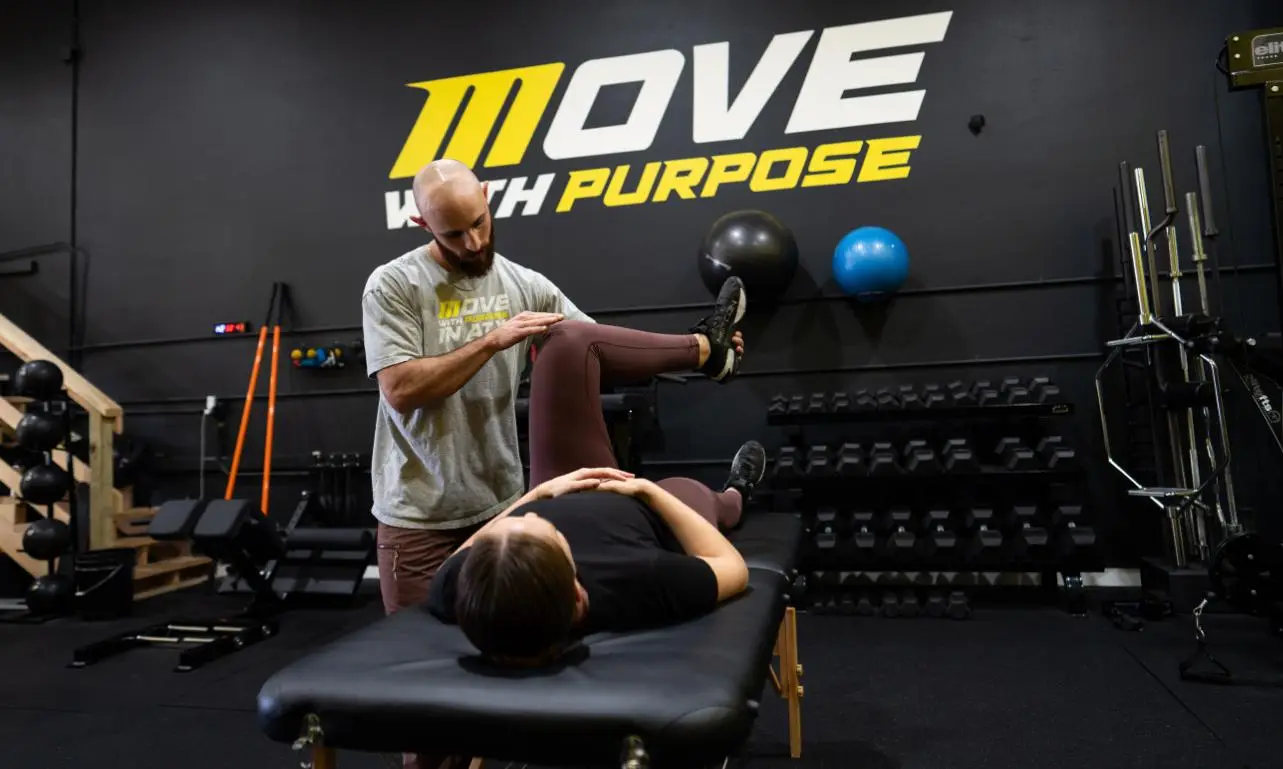
Joint-level assessment is a different category of work. It looks at individual joints, isolated from the rest of the body, and measures specifically what each joint can do.
The hip has a defined set of motions. Flexion, extension, internal rotation, external rotation, abduction, adduction. Each of those motions has a passive range (what the joint can move into when you put it there) and an active range (what the joint can move into when you control it under your own muscle). A joint-level assessment goes through each of these one at a time, on each side, comparing left to right and comparing to what is normal for that joint.
The Functional Range Assessment is the joint-level system we use. It takes three sessions, covers the major articulations of the body, and produces a map of where each joint is and what each joint can do. You leave with answers, not guesses. The hip has these ranges available. The shoulder has these ranges available. This range is restricted. This one is asymmetric. This one is well within normal. This is where the system has capacity, and this is where it does not.
The difference from a movement screen is the level of resolution. A movement screen says “something is off in this pattern.” A joint assessment says “this joint, at this motion, has this range, and the left side differs from the right by this amount.” One tells you the symptom. The other tells you the structure underneath the symptom.
Why both matter
This is where it gets nuanced. Joint-level assessment is more specific. That does not make it more useful in every situation. The two assessments answer different questions and they are both legitimate.
The case for movement screens. They are fast. They give you a useful read on how the whole system functions. For a healthy general-population client who has no specific injury history and just wants to start training, a basic movement screen plus a conversation about goals and lifestyle covers most of what a trainer actually needs to know. The screen flags the patterns that need attention. The training program addresses them. Most people will get better in this kind of model.
The case for joint-level assessment. When the patterns keep failing after training, when the same restriction keeps coming back, when an injury has happened and you need to know what changed at the joint, when you have done all the obvious things and you are still not where you want to be, the screen has hit its limit. You need to know what each joint can do. You need to know which joints are giving you the available range and which ones are compensating. You need the underlying map.
CARs (Controlled Articular Rotations) live in both worlds. They function as daily joint health work and as ongoing self-assessment. The person who does CARs every morning starts to feel where each joint is on a given day, and that information feeds back into how they train. CARs are not a substitute for a full joint assessment. They are a useful daily read on the joints you have already mapped.
The mistake of treating them as interchangeable
The pattern I see most often is a movement screen being used as if it were a joint assessment. Trainer looks at a squat, sees heels lifting, concludes “tight ankles,” prescribes calf stretching for six weeks. The ankle is not actually tight. The hip is restricted in flexion, the person is compensating with the spine and the heel, and stretching the calf does nothing because the calf was never the problem.
The reverse mistake happens too. Joint-level assessment surfaces a restriction in, for example, hip internal rotation. The trainer takes that finding and prescribes hip internal rotation work, but never looks at how the person moves. The hip improves in isolation. The patterns do not change because the body never learned to use the new range in real movement. You expanded the joint and never integrated it.
The right model uses both. You look at how the body moves, and then you look at what each joint can do, and you let those two layers of information triangulate. The pattern-level work tells you where the system is breaking down. The joint-level work tells you what is structurally limiting the system. The training program addresses both.
This is also why the joint-by-joint approach, originally articulated by Gray Cook and Mike Boyle, is more useful than a one-dimensional screen on its own. The joint-by-joint model says different joints have different primary roles (the ankle wants mobility, the knee wants stability, the hip wants mobility, the lumbar spine wants stability, and so on up the chain). When you know what each joint should be doing and you have actually measured what each joint is doing, you have a real picture. Movement screens alone give you the top layer of that picture. Joint assessment gives you the layer underneath.
What this means for training
If you are working with a competent trainer who has done a movement screen, that is a starting point. It is not the same as having been assessed at the joint level. The trainer can program around the screen, and most people will get better. If you have been training for a while and the same problems keep showing up, the screen has likely hit its limit and a joint-level assessment is the next move.
If you have been to physical therapy and gotten cleared, you have been assessed for the specific injury. You probably have not been assessed at the joint level across the whole body, which is a different scope of work. The clinical assessment told the PT what they needed to know to discharge you. It rarely tells you what your training should look like going forward.
If you have a specific area that keeps going wrong (back, hip, shoulder), and other people keep telling you they cannot find anything mechanically that explains it, joint-level assessment is more likely to surface what is actually going on than another round of movement screening or imaging. The information is at a different resolution.
The reason assessment without training is wasted is that information alone does not change a body. You have to do the work, and the work has to match what the assessment found. The reason training without assessment underperforms is that you are programming for a body you do not actually have. Either side without the other leaves the work shorter than it needs to be.
How to decide which one you need
A few practical pieces.
If you are starting from a healthy baseline and just want to begin training, a movement screen is enough. Do not over-engineer. Start with someone who can read patterns and write a program, and let the work begin.
If you have a persistent problem area, joint-level assessment is more likely to find what is going on than another screen. The screen has limits the joint assessment does not have.
If you are an athlete trying to optimize, joint-level assessment plus continued movement work is the most complete picture. The joint assessment finds the structural limits. The movement work integrates them.
If you have been through physical therapy and want to come back to training, the joint assessment is the bridge most people skip. PT discharges based on injury resolution. Training requires knowing what the body can actually do. Those are different standards.
The Motive process for new clients uses both. We start with a Motive Movement and Mobility Assessment for most people, which combines pattern screening and a focused look at the problem areas they came in with. The Functional Range Assessment is the deeper option for people who need a full joint-by-joint map. Which one fits depends on what you are trying to figure out.
Most of what gets called assessment in the personal training world is a screen. Screens are useful and they are not the whole picture. The body is built out of joints. Sometimes the way to fix the pattern is to look at the parts.
Written by

Brian Murray, FRA, FRSC
Founder of Motive Training
Motive Training is a coaching studio in South Austin built around assessment, joint health, and strength you can use. Train with us in the studio, come to a KINSTRETCH class, or work through the progressions in KINSTRETCH Online.