Twelve weeks is the standard unit of measurement across most of the fitness industry. Twelve-week challenges, twelve-week transformations, before-and-after photos taken exactly eighty-four days apart. The number holds up for a real reason: twelve weeks is close to the shortest window in which a person can produce a visually dramatic change, provided the program stays aggressive and the person sticks with it. It photographs well. It fits neatly into a marketing calendar. For a specific goal with a real deadline, dropping weight fast for a wedding or a reunion, it can work exactly as advertised.
The real problem is that almost nobody’s actual goal is a photo. Push past the marketing language and the target is usually something closer to still being able to do the things that matter in ten or twenty years, without the body falling apart along the way, a timeline nothing about twelve weeks was ever built to serve.
What a twelve-week program is built to do
A twelve-week program gets built backward from one event: the after photo. The aggressive deficit, the high volume, the intensity that can’t hold past the finish line, all of it gets justified because it only has to hold together for twelve weeks. Once the photo gets taken, the program has technically done its job, whatever happens next. For a short-term goal with a real deadline, that’s an honest tool, and plenty of people run one for exactly that reason. The trouble starts once it becomes the default way an entire industry sells training, because it quietly teaches people that fitness is a project with an end date, when the work itself functions closer to ongoing maintenance.
Why that model fails most real timelines
Almost nobody’s body has a twelve-week problem. A shoulder that’s been catching for three years didn’t get that way in twelve weeks, and won’t resolve in twelve weeks either. Joint capacity, the kind behind getting off the floor without using your hands, carrying groceries up a flight of stairs, swinging a golf club without the back seizing the next morning, builds and erodes across years. Training toward that timeline with a twelve-week mindset produces a predictable pattern: a burst of intensity, a visible result, then a slow slide back toward where things started, because nothing about the program was built to be lived in permanently.
The issue sits with intensity treated as the whole strategy, borrowed against a body that then has to spend the next several months paying it back through fatigue, irritated joints, and motivation that quietly collapses once the deadline passes. A program built for twelve weeks doesn’t need an answer for what happens in month four, because by design, it stopped asking the question after week twelve.
Training for capacity that has to last decades
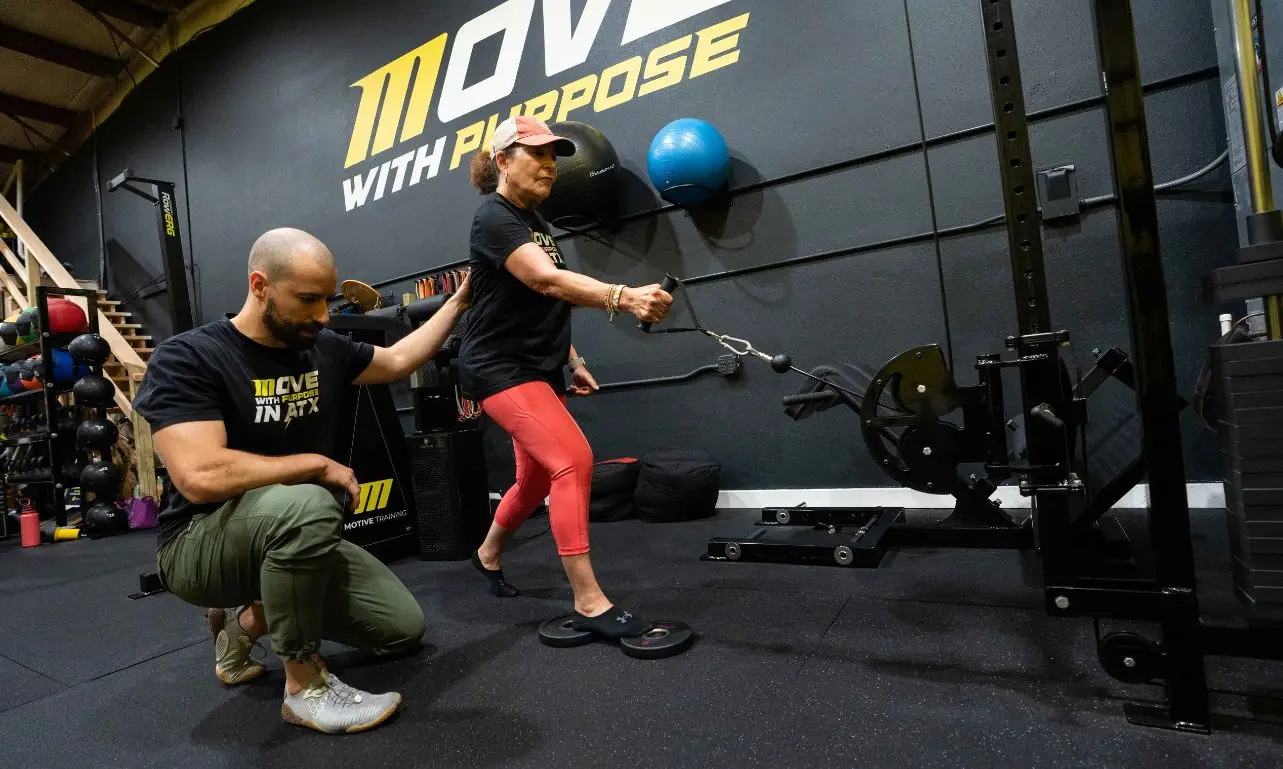
The alternative is less dramatic and, frankly, less marketable. There’s no single before-and-after moment, because there’s no finish line. The work looks closer to what training after a discharge from physical therapy requires, or what long-term joint health demands: consistent, sustainable loading held over years instead of compressed into a sprint, the same do more with less principle that governs everything else here. Progress looks like a shoulder that stops catching and stays that way: a change tracked through retesting over months, not a single photo taken at exactly the right angle. That kind of change doesn’t come with a countdown clock, and it doesn’t need one either, since the relationship with training was never supposed to end when a single goal got hit.
The honest trade-off
This is worth stating plainly. Training for decades of capacity instead of a twelve-week result means there’s no dramatic reveal to point to. Nobody’s walking away from a program built around the five tenets that guide how Motive trains people with a jaw-dropping before-and-after, because that was never the design. What it buys instead is a body that keeps working the way it’s supposed to for a lot longer than twelve weeks would ever produce. That trade-off isn’t for everyone, and it doesn’t need to be. Someone chasing a specific, dated goal is better served elsewhere, and that’s worth saying plainly instead of pretending every program should look the same. For everyone else, it’s the honest version of what training requires when the goal is staying capable of what matters well past whatever the current calendar year happens to be.
Written by

Brian Murray, FRA, FRSC
Founder of Motive Training
Motive Training is a coaching studio in South Austin built around assessment, joint health, and strength you can use. Train with us in the studio, come to a KINSTRETCH class, or work through the progressions in KINSTRETCH Online.