Every few weeks someone walks into Motive fresh off a session at ABP or Crux, shoulder cranky, telling me they don’t understand it because climbing is supposed to be great for mobility. It’s a reasonable thing to believe. You’re reaching overhead, twisting through your hips to get a high step, cross-body reaching for the next hold. All of that looks like mobility work. It isn’t, not in the way that actually protects a joint.
Here’s the distinction that matters. Climbing puts your shoulders and hips into big ranges of motion under load. That’s real and it’s valuable. But putting a joint into a range under load is not the same as training that joint to control the range on its own. Climbing gets you there because gravity, the wall, and the next hold are pulling you there. The joint didn’t earn that position through strength. It arrived there because the route demanded it, and a joint that arrives at a range without building the strength to hold itself there tends to compensate somewhere else, usually right up until it doesn’t anymore.
Why climbers plateau on the same restrictions
The shoulder is the clearest example, and the research on it is specific. A 2009 study directly compared shoulder rotator strength in experienced sport climbers against nonclimbers and found climbers had a meaningfully lower external-to-internal rotation strength ratio than nonclimbers, in both concentric and eccentric testing (1). Climbing builds enormous internal rotation and pulling strength through the lats and pecs. It does far less for the external rotators, the smaller muscles at the back of the shoulder responsible for keeping the joint centered and controlled at end range. Climbing’s own demand pattern is what creates the imbalance. You end up with climbers who can reach the hold just fine but have almost no active control once they’re there, which is when people describe pump that shows up faster than it should, or a shoulder that feels unstable at full reach even though passive range is fine.
This matters because shoulder problems in climbers are common and largely preventable, not inevitable. A 2023 systematic review of overuse injuries in adult climbers found that a strength training intervention was associated with fewer shoulder and elbow injuries, while stretching showed no measurable association with reduced injury risk at all (2). That is a direct answer to the assumption this whole article is arguing against. The fix was never more stretching. It was strength, specifically at the ranges climbing already demands but never deliberately trains.
Hips follow a related pattern, just less discussed, and it maps cleanly onto specific climbing positions. A high step asks the hip for maximal flexion. Flagging asks for internal rotation and adduction. Frog position and drop-knees ask for external rotation. These are also, not coincidentally, the exact positions associated with femoroacetabular impingement, a structural restriction at the hip joint itself rather than a muscular one, and it is a well-documented source of hip pain specifically in climbers performing these movements (3). Climbers with limited hip internal rotation often describe a specific, repeatable pinch during high steps rather than a general stiffness, which is a real pattern I hear from climbing clients regularly, and it’s a useful clue that the restriction is capsular rather than just muscular tightness. If a similar pinch shows up during a deep frog position or a seated groin stretch, that’s worth paying attention to rather than pushing through.
What closes the gap between passive range and usable range
This is where Controlled Articular Rotations and end-range isometric work, PAILs and RAILs, earn their place, and it’s a different job than the mobility routines most climbers already do between attempts. Static stretching between burns, or a few shoulder circles before getting on the wall, addresses tissue tolerance for a few minutes. Given that stretching didn’t show up as protective in the injury research above, that’s a real limitation, not a minor one. It does very little to teach the nervous system that the shoulder or hip can be trusted, and controlled, at the outer edge of its range. That’s a strength deficit wearing a flexibility costume, and stretching alone doesn’t solve it.
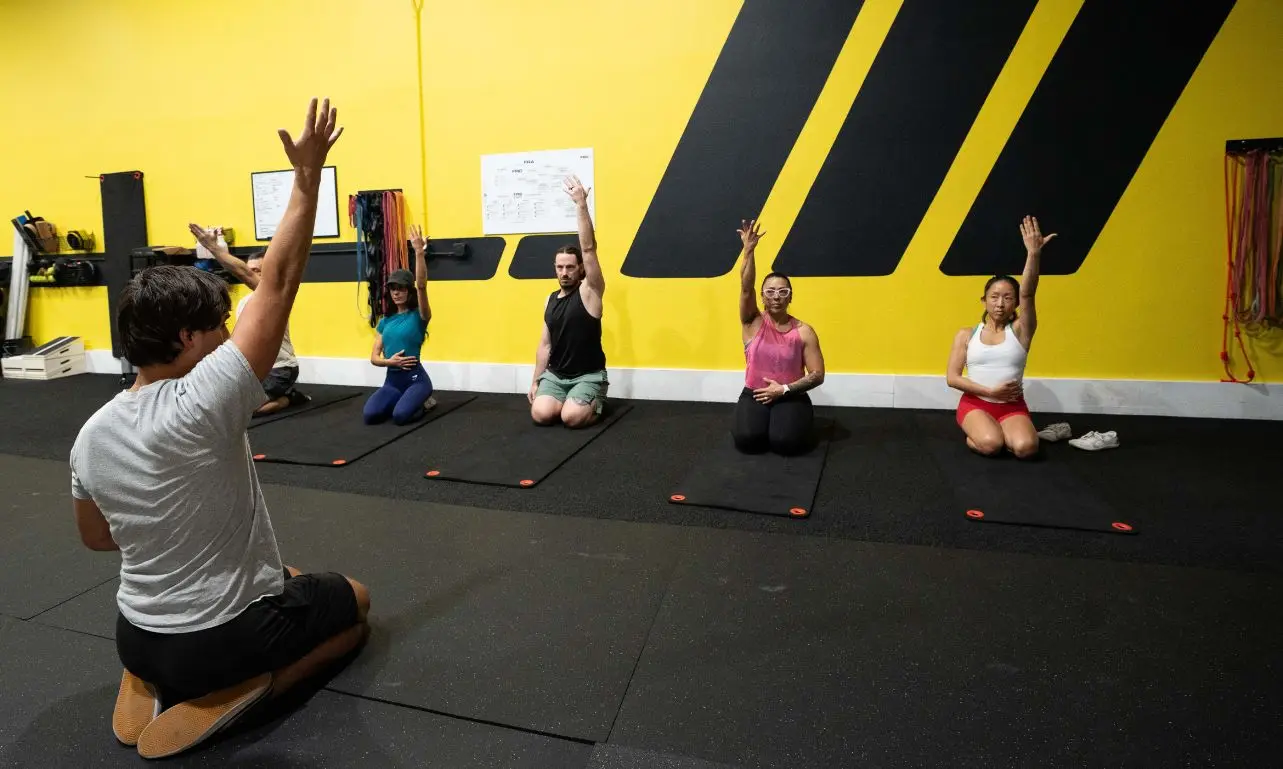
Deliberate joint training does something different. Shoulder CARs performed slowly and with real muscular tension teach you where your actual workspace ends, not just where you can be pulled to. End-range isometric loading at the shoulder’s external rotation limit, or the hip’s internal and external rotation limits, builds strength exactly where climbing asks you to perform but never asks you to train, and it is the specific external rotation strength gap the research identified above.
The other piece climbers consistently skip is finding out where the actual restriction lives before trying to fix it. A shoulder that feels tight during a reach might be restricted at the joint capsule, or it might be a strength deficit at end range that only feels like tightness because the nervous system is protecting an unstable position. Those are two different problems with two different solutions, and guessing wrong means training the wrong thing for months. A movement assessment built around athletic demands gives you that answer directly, joint by joint, instead of leaving you to interpret vague sensations of tightness on your own.
Training around a sport that already demands a lot
None of this means climbing is doing something wrong. Climbing is a genuinely demanding, skill-rich sport, and Austin’s setup for it is about as good as it gets: ABP’s two locations, Crux downtown and south, and outdoor days at the Greenbelt or out at Reimers Ranch when the weather cooperates. The issue isn’t the sport. It’s that a sport that hands you enormous range under load, several times a session, needs a separate, deliberate practice for turning that access into actual strength, and most climbers never build that practice because nothing about climbing forces them to notice the gap until something starts hurting.
The climbers who hold up over years, not just seasons, tend to be the ones who treat joint-specific training as separate from wall time rather than something that happens automatically because they climb a lot. Consistent Controlled Articular Rotations done with real intent, a few times a week, does more for long-term shoulder health than another finger board cycle. This work doesn’t show up on a send log, but it’s the reason your shoulders are still cooperating in ten years.
References
- Wong EK, Ng GY. Strength profiles of shoulder rotators in healthy sport climbers and nonclimbers. Journal of Athletic Training, 2009
- Risk factors and injury prevention strategies for overuse injuries in adult climbers: a systematic review, Frontiers in Sports and Active Living, 2023
- Don’t Let Hip Pain Stop You From Climbing, Boulder Climbing Community, on femoroacetabular impingement and climbing-specific hip positions
Written by

Brian Murray, FRA, FRSC
Founder of Motive Training
Motive Training is a coaching studio in South Austin built around assessment, joint health, and strength you can use. Train with us in the studio, come to a KINSTRETCH class, or work through the progressions in KINSTRETCH Online.